
OVERVIEW
- Tour Dates
- Thursday, September 17–Friday, September 18, 2025
- Place
- Iwate Prefecture
- Participants
- 6 participants
- Topics
- Diverse People Weaving Traditions for the Future—Visiting Where Traditions Are Passed on in Iwate
This press tour focused on traditional crafts in Iwate Prefecture such as sakiori weaving, sashiko embroidery, homespun textiles, and Nambu ironware, covering efforts to train the next generation in the face of population decline and an aging population, as well as initiatives to pass on traditional local performing arts using technology and to support participation by women and people with disabilities.
A total of 6 journalists from 5 media outlets participated in the tour, from France, South Korea, Taiwan, and Vietnam.
*This press tour was sponsored by Iwate Prefecture and planned and operated by the FPCJ
*For more details, see the tour notice here.
Day 1
<Otsuchi Sashiko>
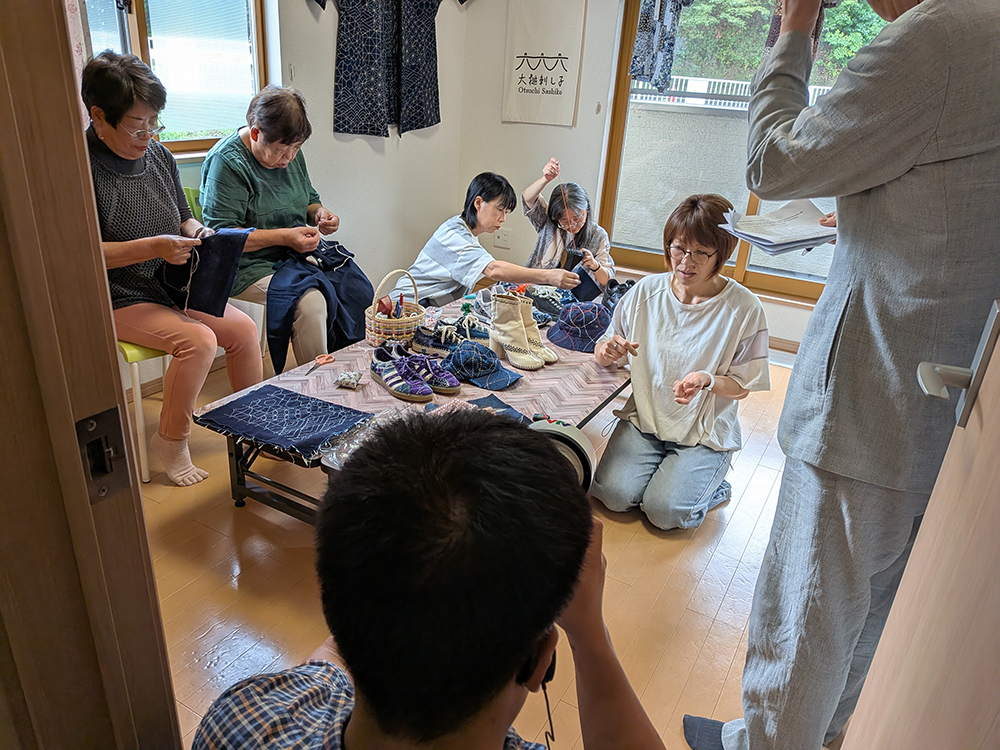
The tour went first to the town of Otsuchi on Iwate’s coast, where they visited Otsuchi Sashiko, an organization created by women affected by the Great East Japan Earthquake and Tsunami, with support from a volunteer organization.
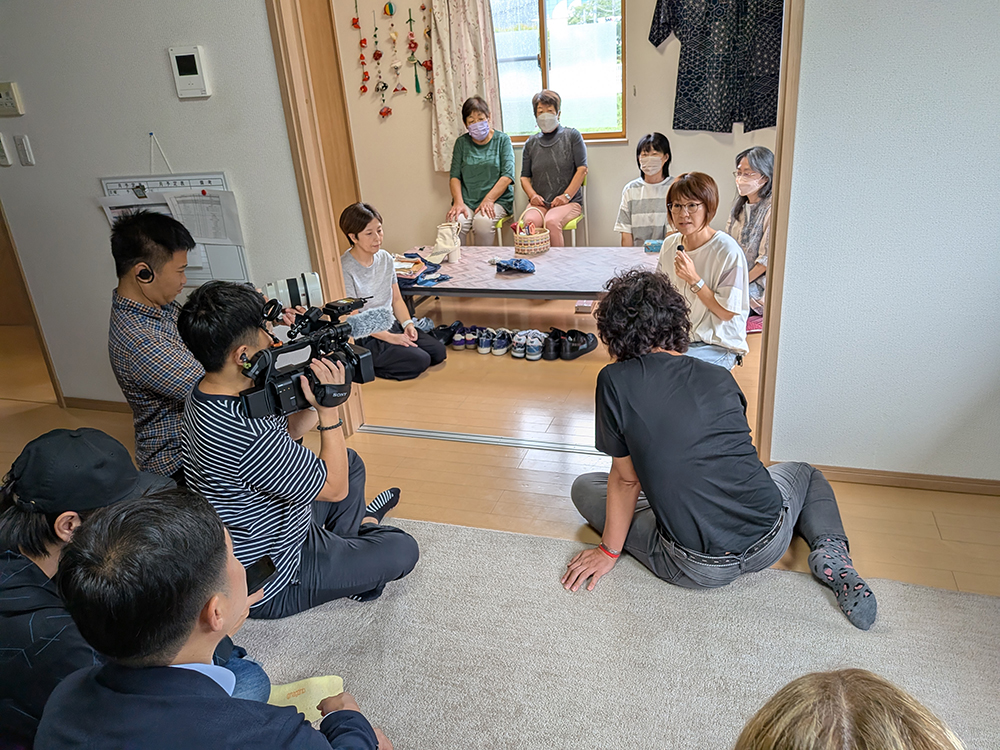
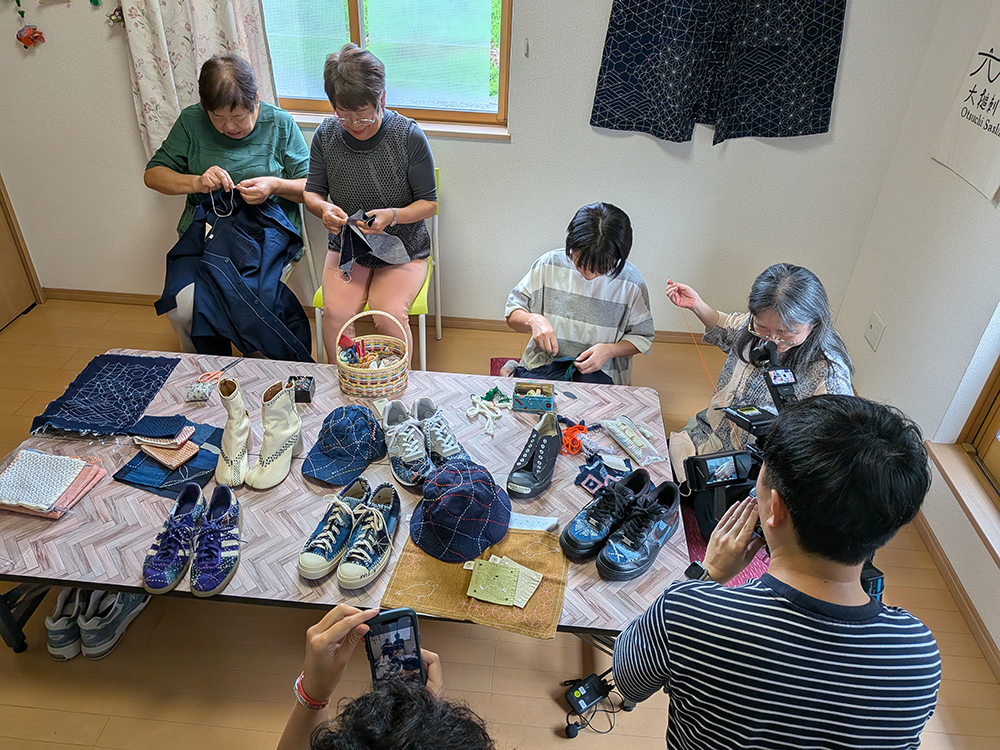
The tour heard from Ms. Kanako Sasaki, from the NPO Terra Renaissance which manages Otsuchi Sashiko, about the background of founding the organization and its activities such as collaborations with fashion brands. Afterwards, the tour was able to see the women, including one who has been participating for 15 years, perform sashiko embroidery on fabric and sneakers.
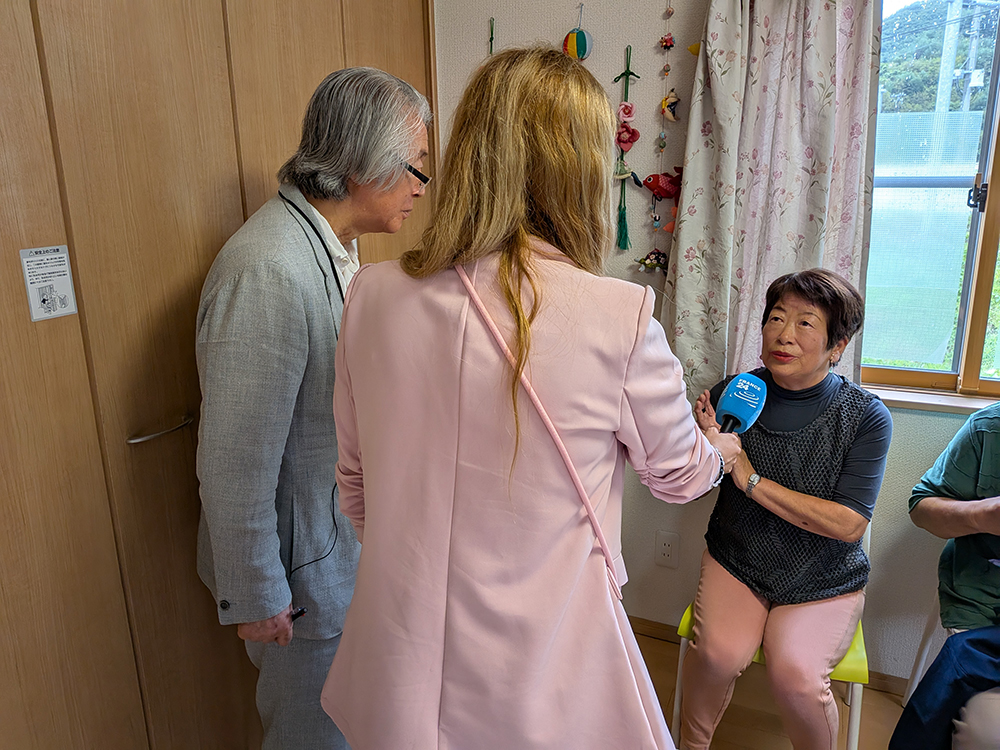
The journalists asked the women working as sashiko artisans about why they decided to participate, their feelings when they make sashiko, their emotional state immediately after the earthquake, their thoughts on how the town changed from the time of the earthquake until now, and their future goals. One of the artisans, Ms. Ruiko Ishii, explained how even though she faced despair after the earthquake, connecting with others through sashiko let her find hope.
<Tono Denshoen Oshirado Hall>
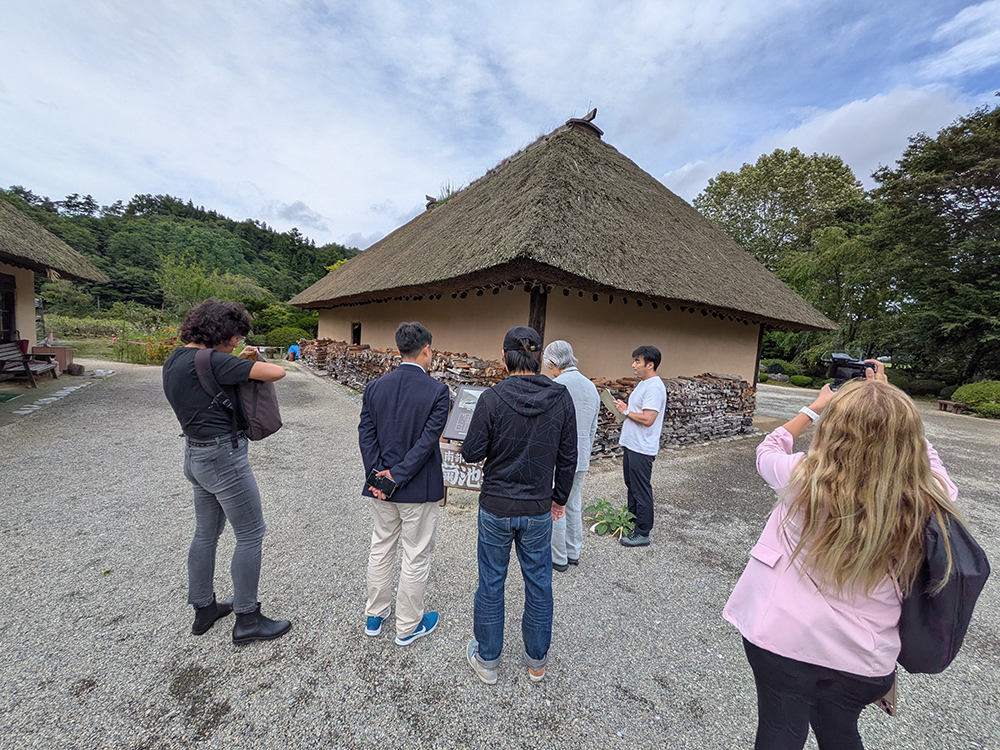
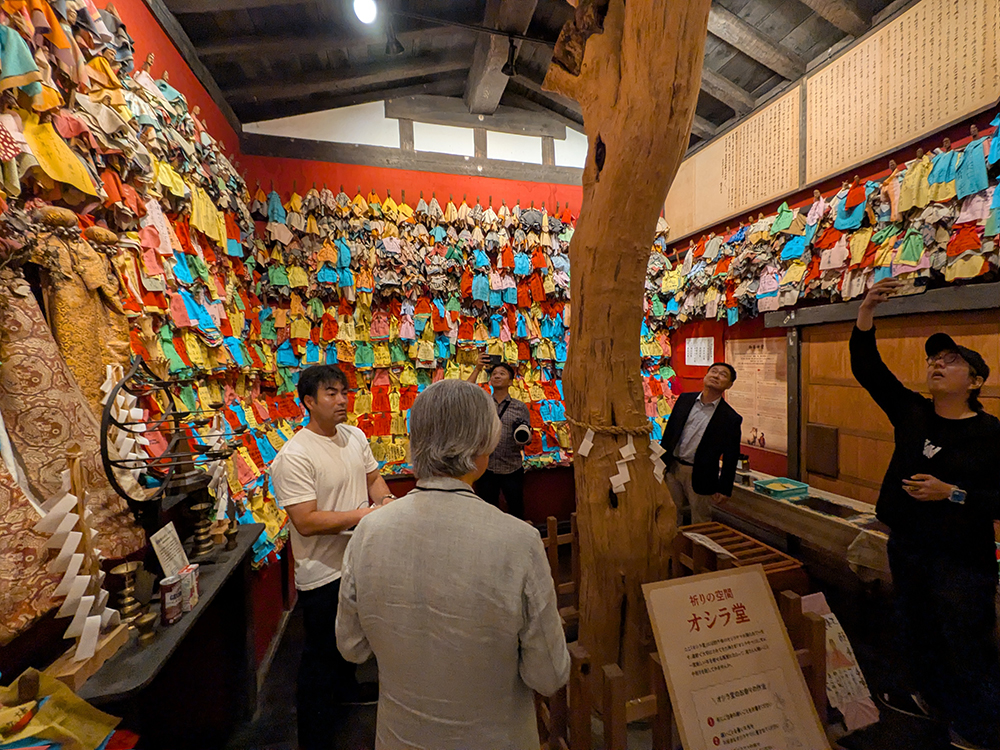
The tour then traveled inland to the city of Tono, and visited the Tono Denshoen, a museum passing on the traditions of the local people. Mr. Kazuya Saito, director of operations of Denshoen, guided the tour to see a magariya house with a thatched roof built around 250 years ago which was relocated to Tono Denshoen, and to Oshirado Hall, which houses over 1,000 wooden dolls of Oshira-sama, a deity worshipped in folk beliefs in the Tohoku region.
The journalists asked about how folk beliefs should be passed down in the future and what ideas Mr. Saito had of connecting folk beliefs with tourism and education. The journalists also wrote down their wishes on fabrics of various colors and dressed the Oshira-sama dolls with them.
<Iwachu Co., Ltd.>
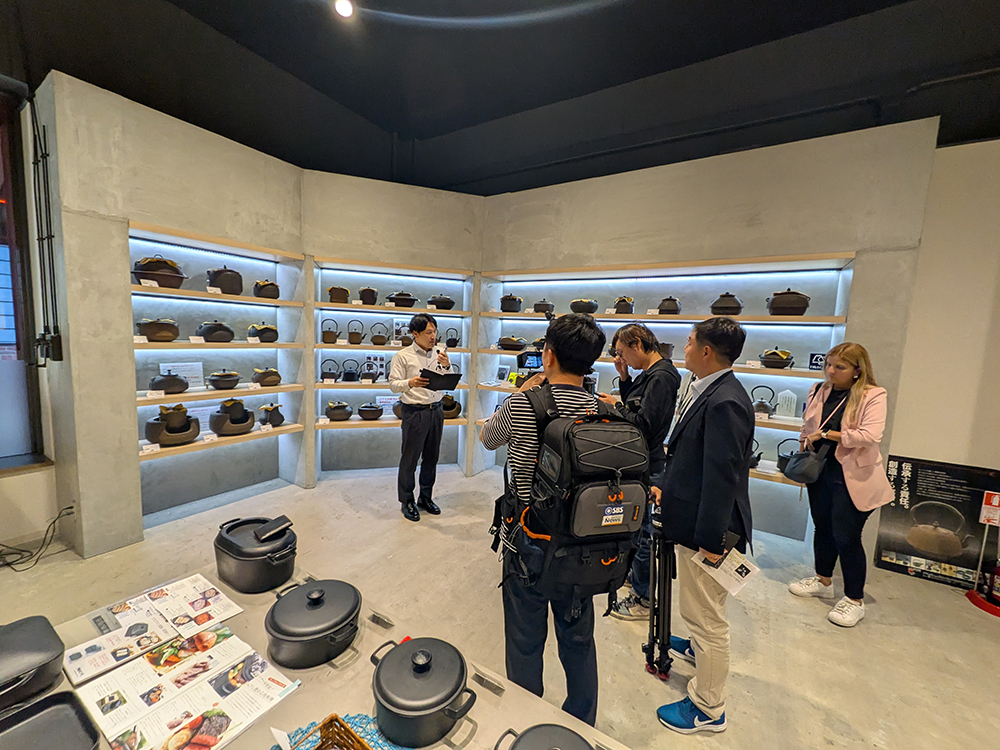
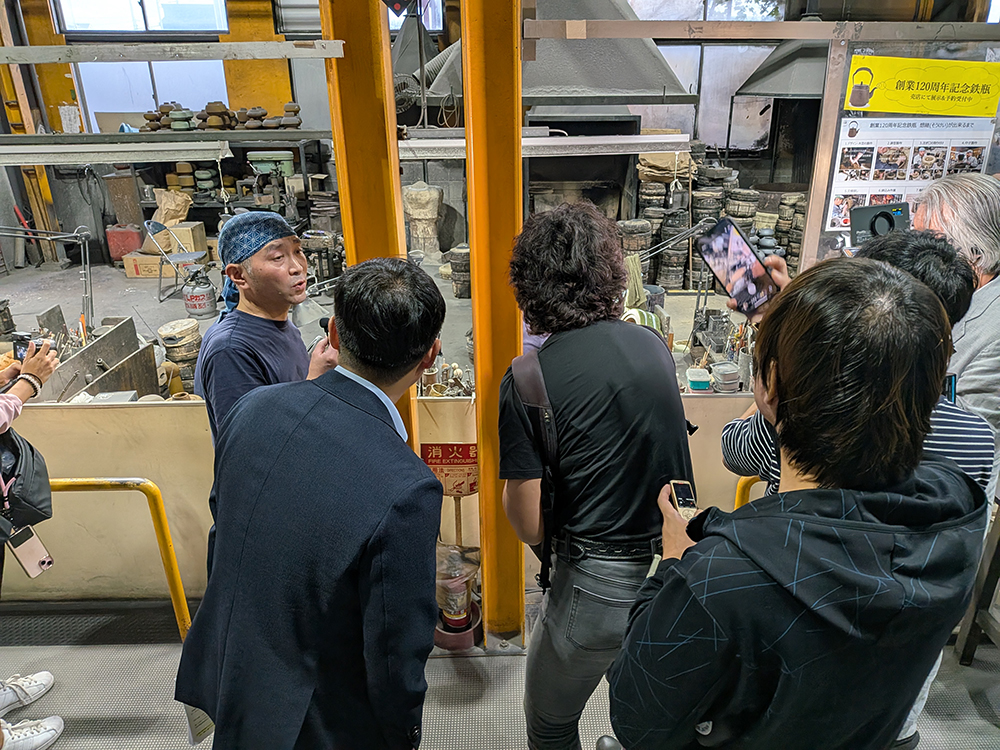
Next, the journalists visited Iwachu Co., Ltd. in Morioka, a company which makes Nambu ironware, a traditional craft Iwate Prefecture is known for. Mr. Kiyomitsu Takahashi, head of the sales department, started by giving an overview of the company and explaining the characteristics of the Nambu ironware they make.
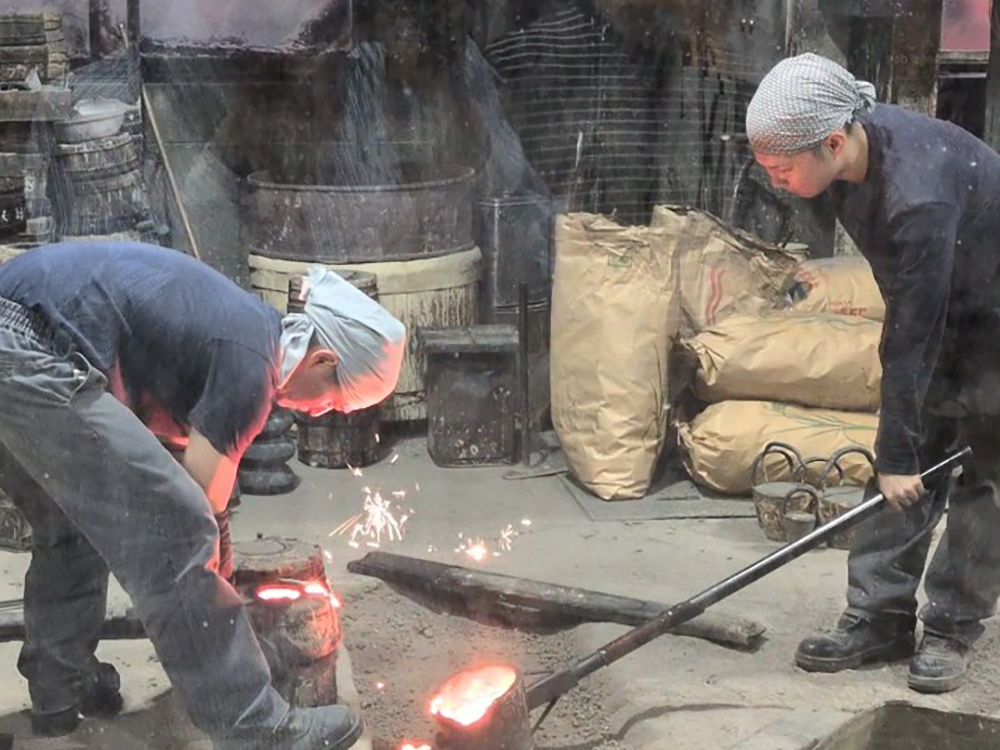
The tour then went to the workshop and got to see first hand embossing, casting, and all the other processes of making Nambu ironware. This was alongside an explanation from veteran artisan Mr. Akira Yaegashi, a designated Master of Traditional Crafts.
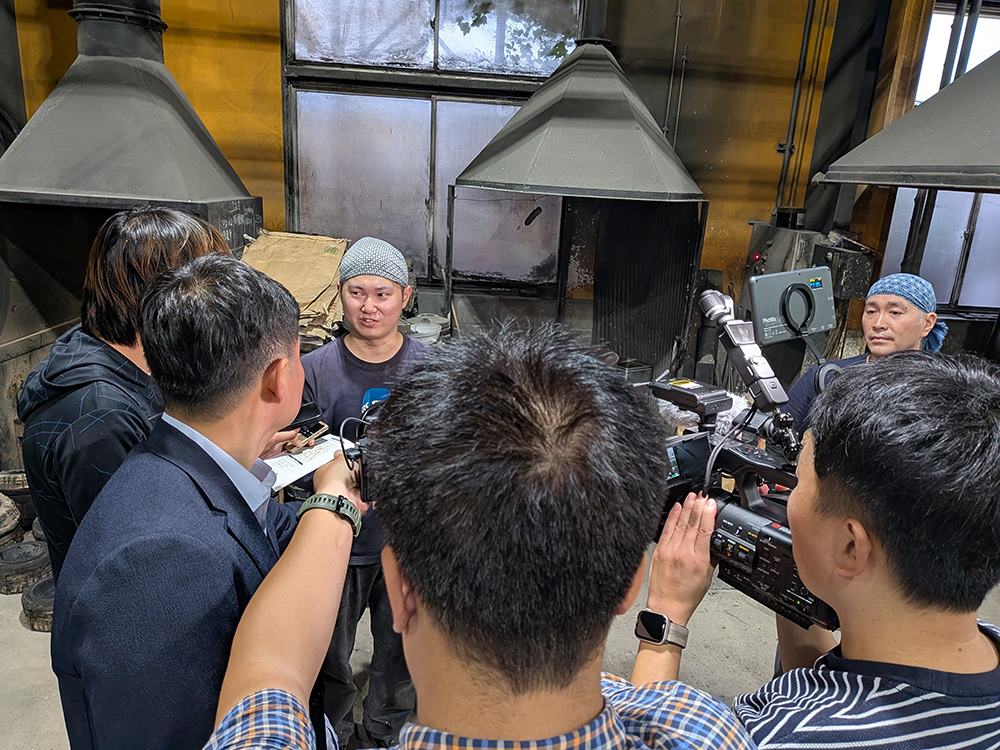
Iwachu has established an efficient training system, and has trained many young artisans. The journalists spoke with two of those young artisans, Mr. Yuito Ogawa and Ms. Mai Fukurohata, asking them about what was difficult or entertaining in their work, and their goals for the future. Mr. Ogawa commented that his goal was to become an artisan like his grandfather, a Master of Traditional Crafts who worked at Iwachu.
The journalists also asked Mr. Yaegashi how he had been able to work as an artisan for 30 years straight. He explained that this was fun, not work, so he had been able to just keep going.
Day 2
<Michinoku Akane-kai>
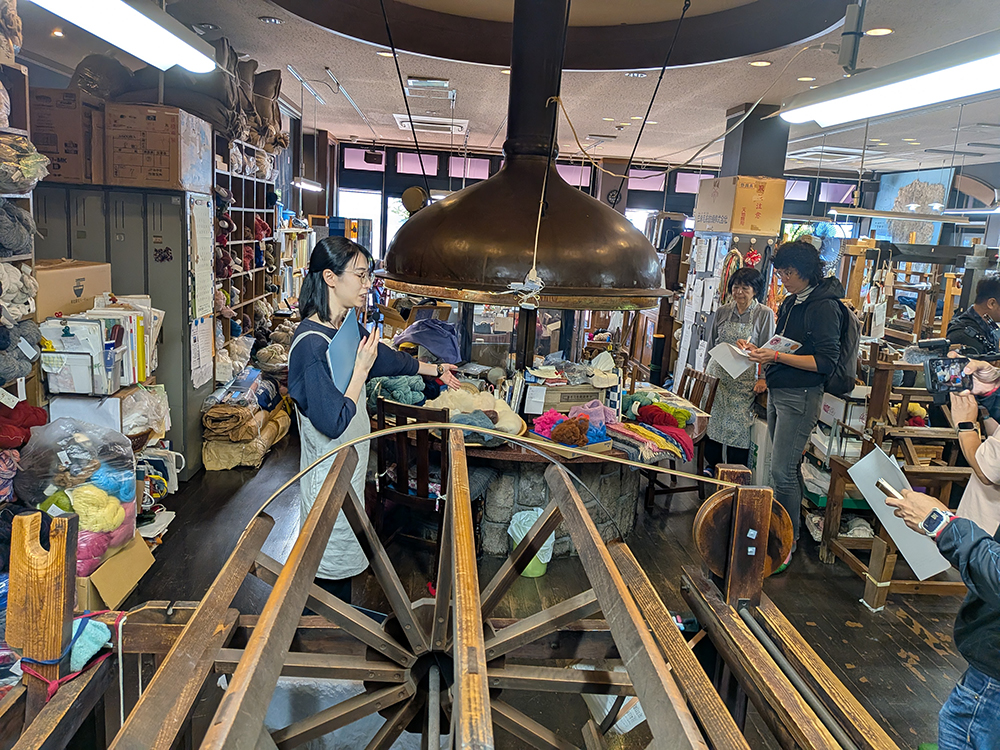
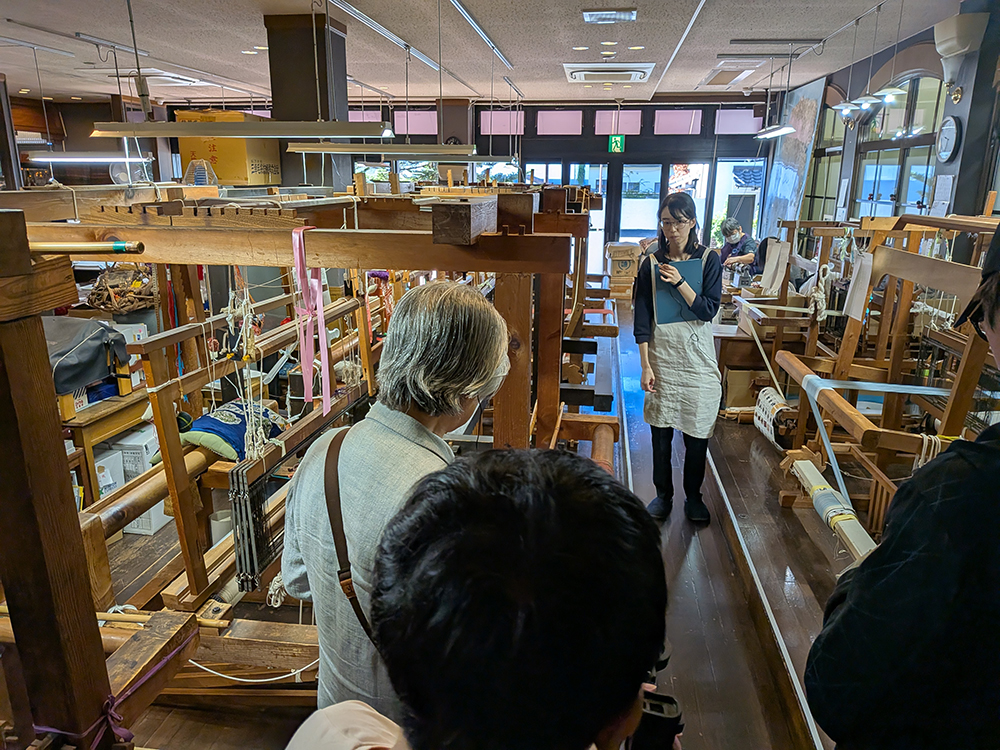
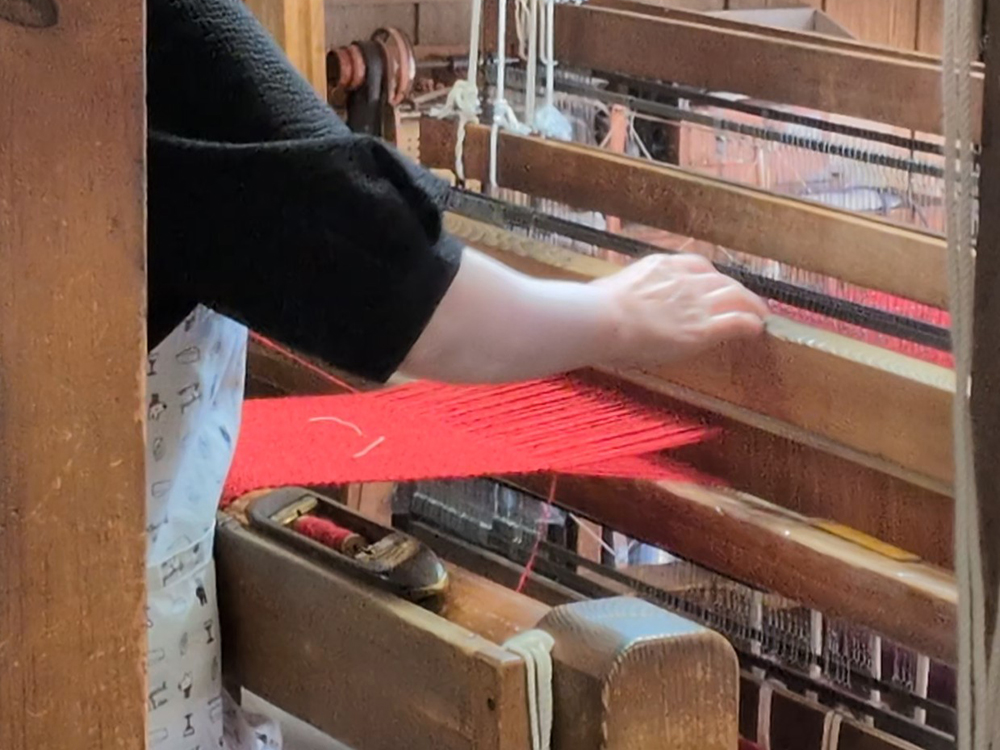
Michinoku Akane-kai in Morioka was originally founded to support economic independence for women who had been widowed in World War II. Since its founding up until the present day, it has been run by only women, making homespun (hand-woven fabric made with dyed wool), a traditional craft with a long history in Iwate Prefecture. Flexible employment styles have also been implemented in recent years, helping to maintain the organization.
The tour heard from Ms. Ayaka Suwa, a younger employee at the company, about its history and the characteristics of its products. Next, the journalists heard more details about Michinoku Akane-kai’s history from Ms. Keiko Tanifuji, a veteran employee who has worked there for around 30 years.
The tour then saw homespun being made, almost entirely by hand, as well as the long-beloved, high-quality products being made from it.
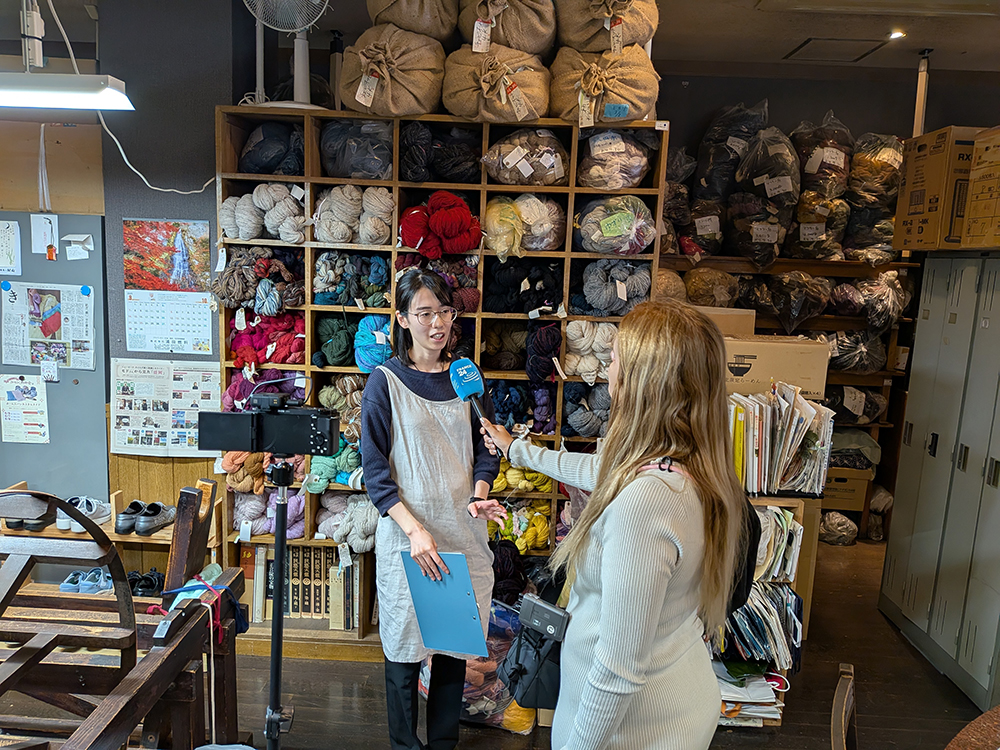
The journalists asked about the difficulty of making homespun, what led to them working there, the appeal of homespun, and future plans. Ms. Suwa commented how proud she was of their homespun, which was light yet resilient due to being spun with just the right amount of force by their artisans, and said she would like to expand their business overseas.
<Saccora Japan>
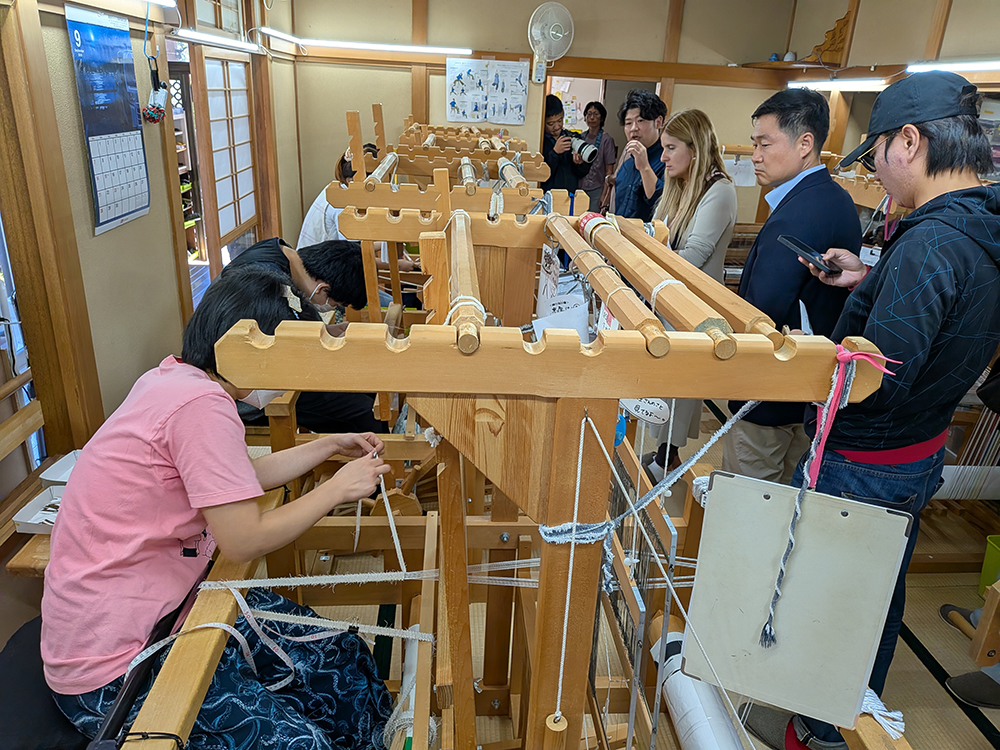
Saccora Japan in Morioka makes sakiori, a traditional craft in Iwate Prefecture made by tearing up old fabric into strips to weave into new fabric. The company is operated as a Type B Continuous Support for Employment Center, which provides training and support to people with disabilities or diseases that would have difficulty working in other companies, so that they can acquire the knowledge and skills necessary to work. Users with disabilities work alongside people without disabilities at Saccora Japan. The sakiori made there is well regarded for its quality, and several brands have made products in collaboration with Saccora Japan.
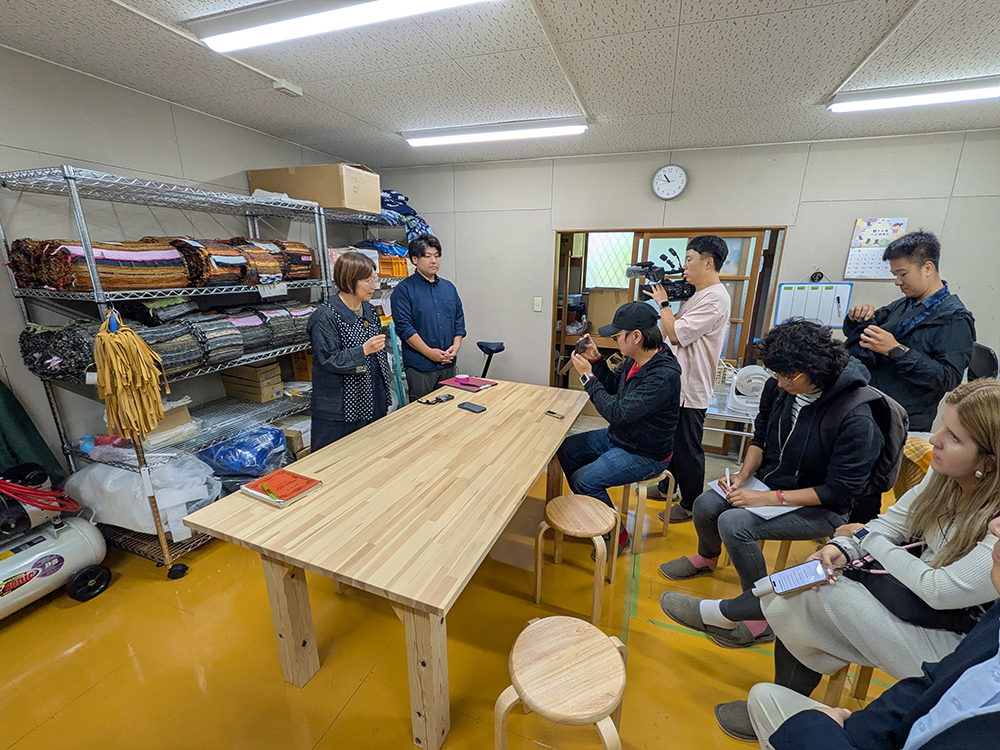
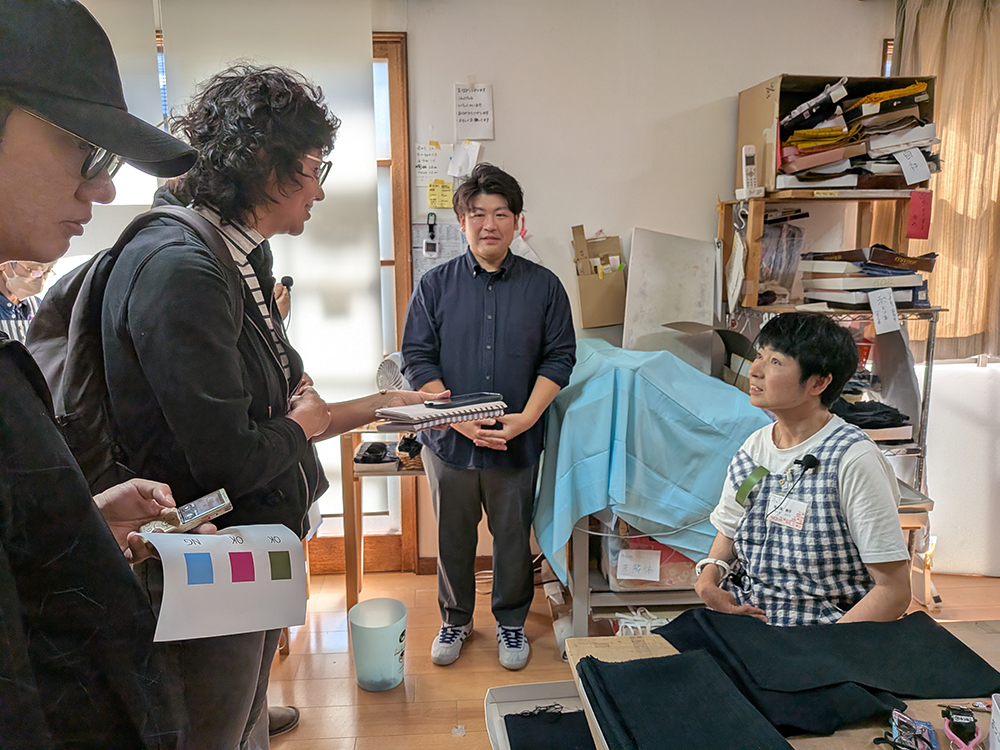
The journalists heard from Ms. Etsu Ishigashira, president of Saccora Japan, about the background behind founding the company, and then saw sakiori being made by hand in a step-by-step process by users with disabilities, guided by Mr. Ryota Murayama, director of the employment center and sakiori business.
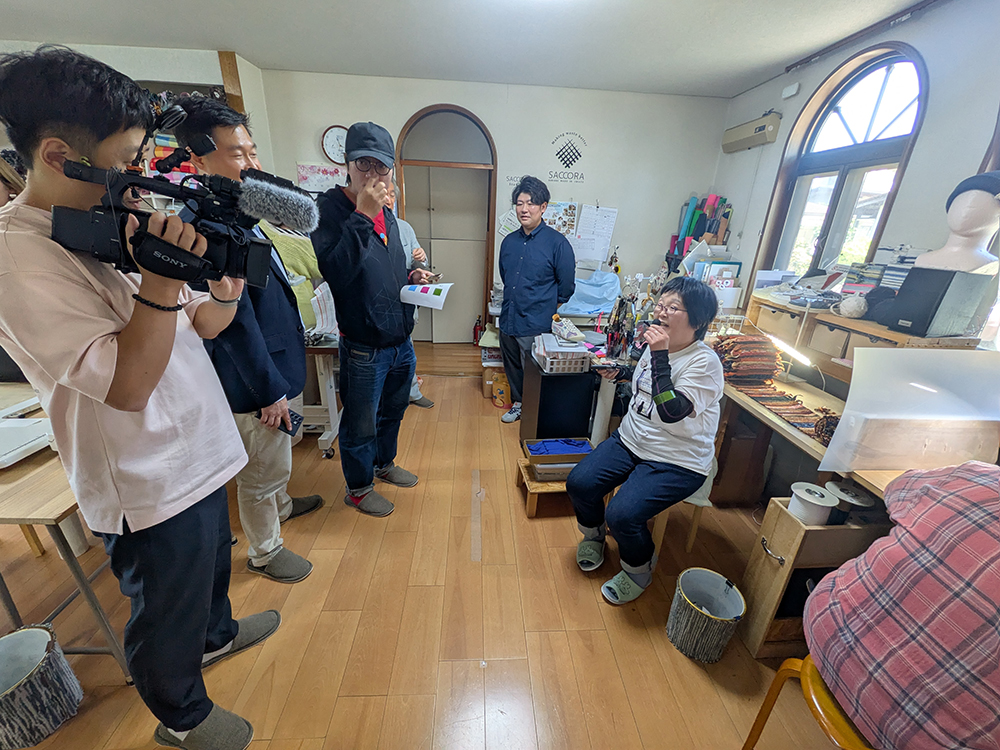
The journalists asked questions about what challenges there were in combining traditional crafts with social services, and how they felt about sakiori, which used to just be a useful skill, becoming praised as a fashionable traditional craft. The journalists also interviewed artisans, asking about the satisfaction and difficulty of the work there, and one of them, Mr. Toya Abe, commented that although some steps of the process were difficult, he was able to enjoy the work to make products.
<Koyata Co., Ltd.>
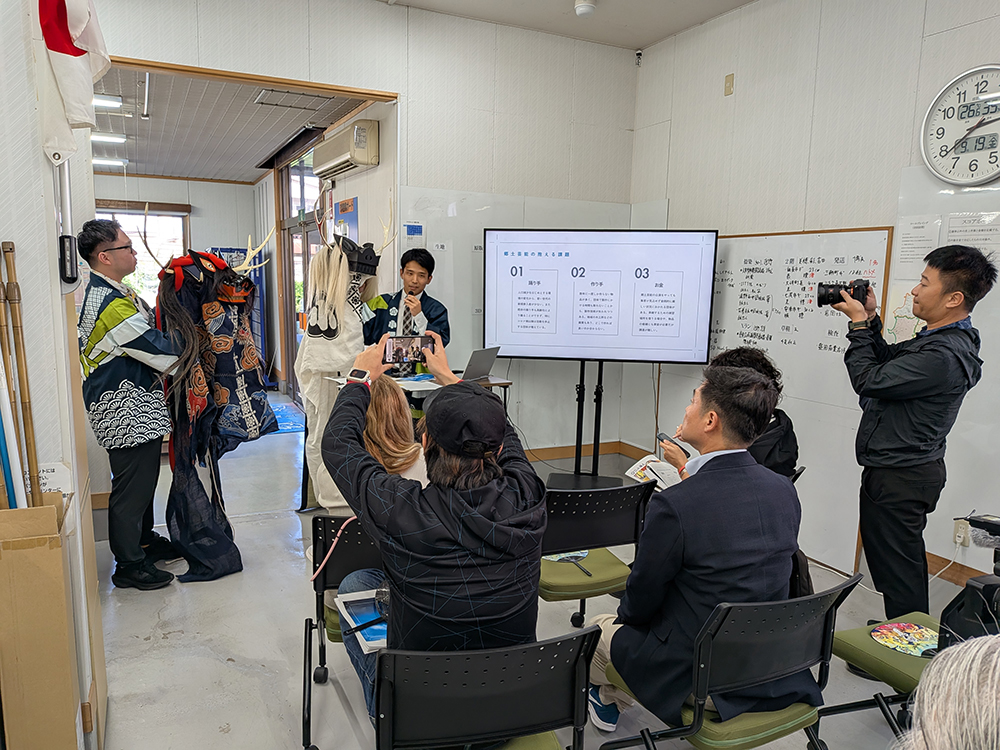
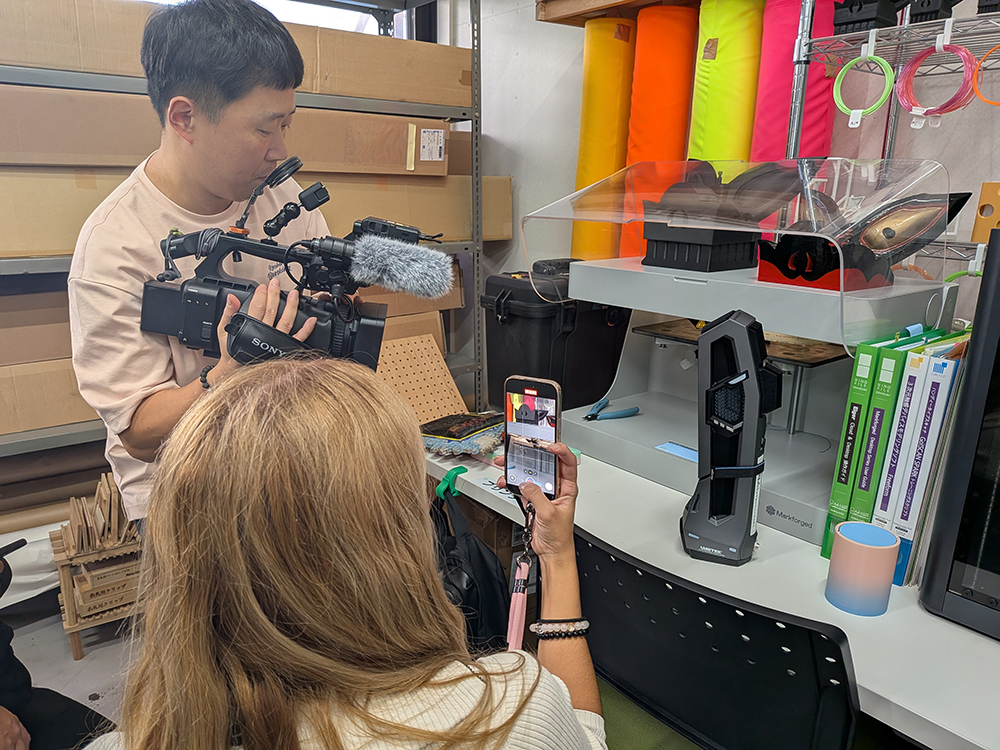
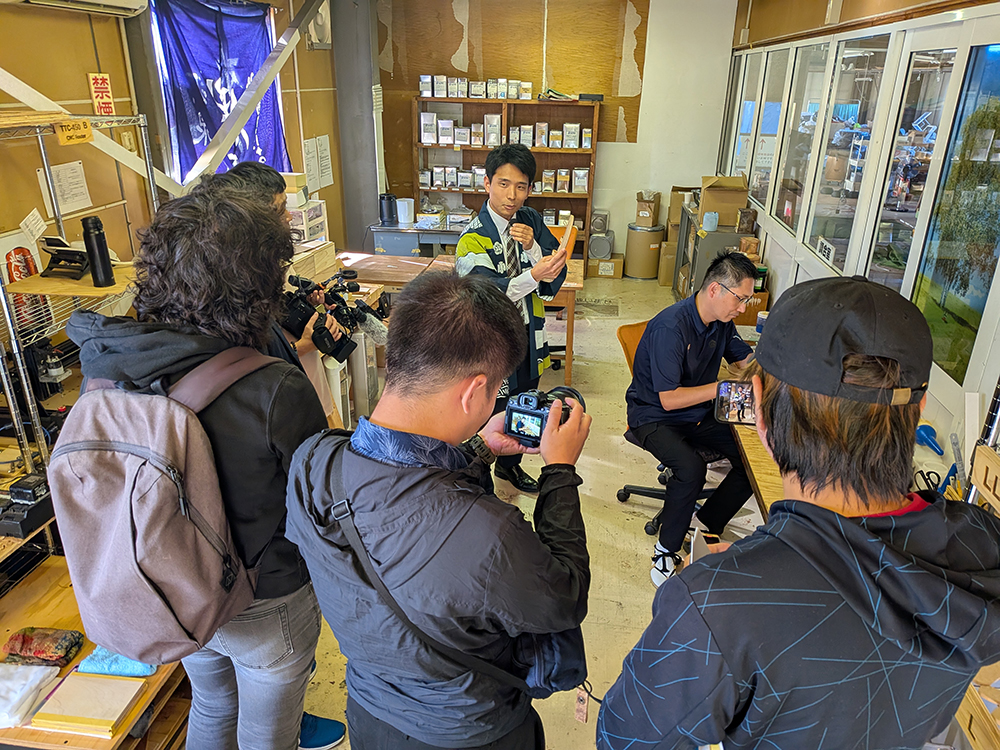
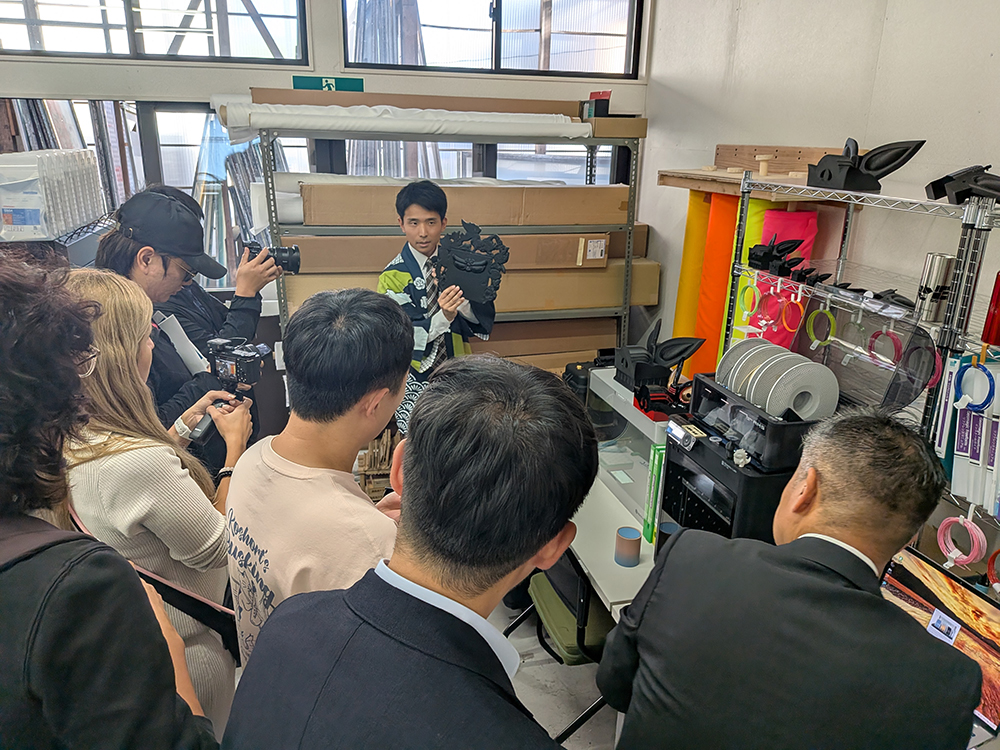
Located in the city of Hanamaki, Koyata Co., Ltd. has been using 3D printing to help make costumes for traditional performing arts, in response to the decrease in the number of artisans due to population decline.
The tour heard from Mr. Yuta Kosegawa, the 10th-generation successor and sales manager of Koyata, which since its founding had dyed goods as its primary business. He explained why the company had entered the business of creating costume parts for traditional local performing arts, and an overview of their activities. The journalists then saw a mask for the local performing art shishi-odori (deer dance) be 3D printed, as well as rubber waraji sandals being made, another item critical for the dancers.
The journalists asked Mr. Kosegawa how long it took to make a mask using 3D printing, what difficulties he encountered in the process, and his future goals.
<Kasuga Style Ochiai Shishi-odori>
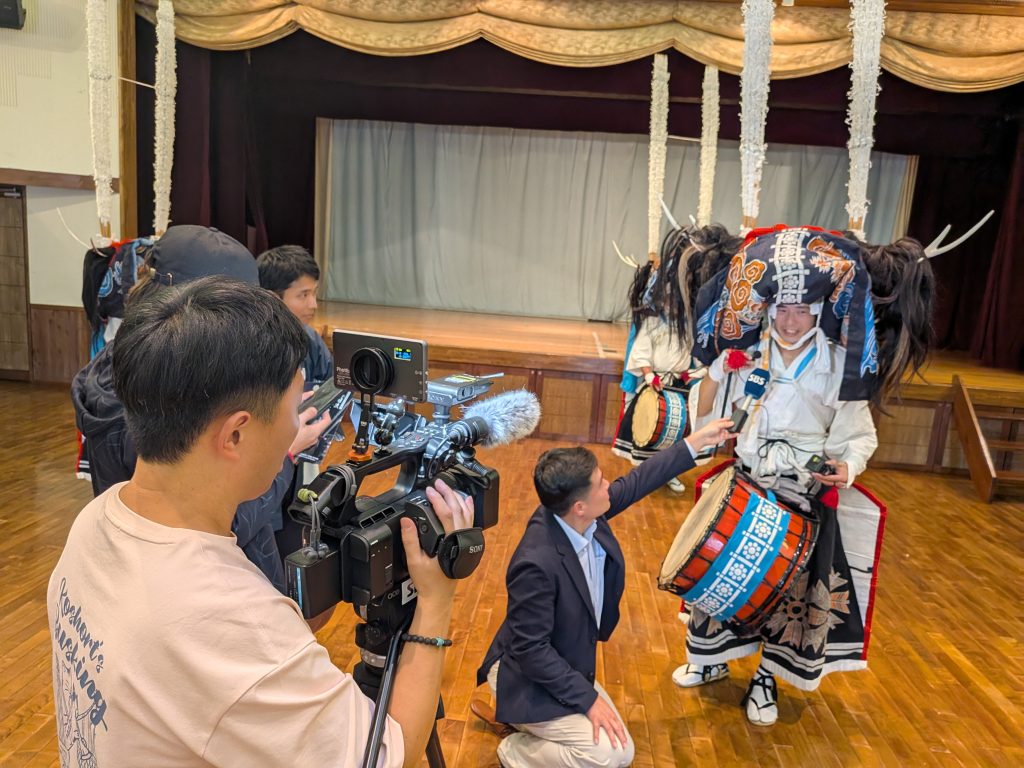
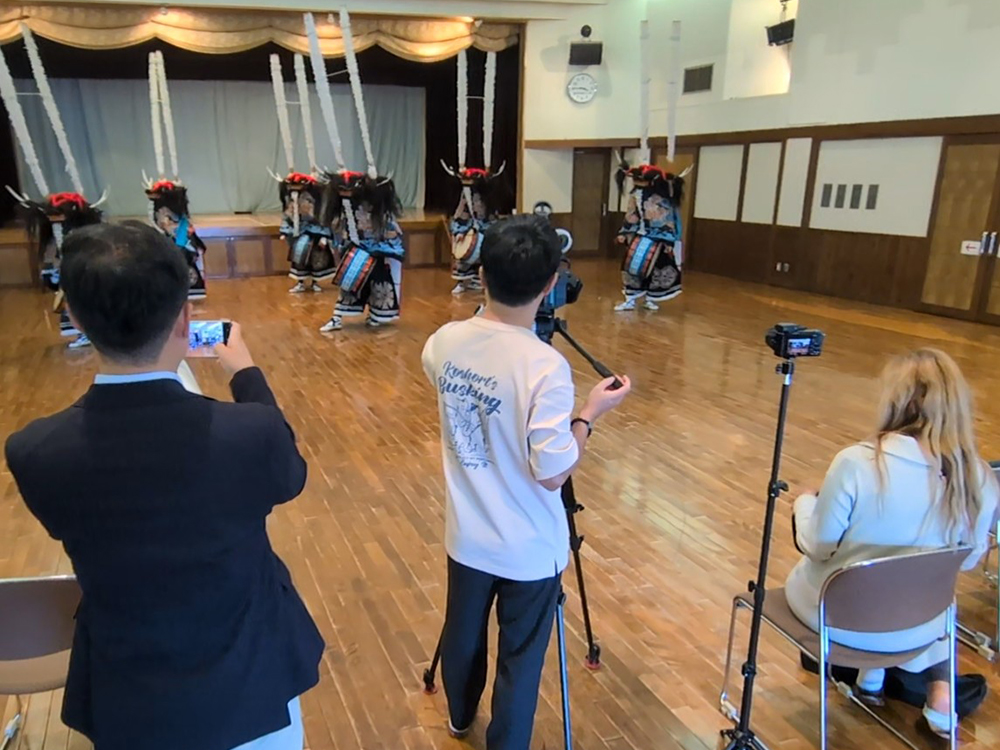
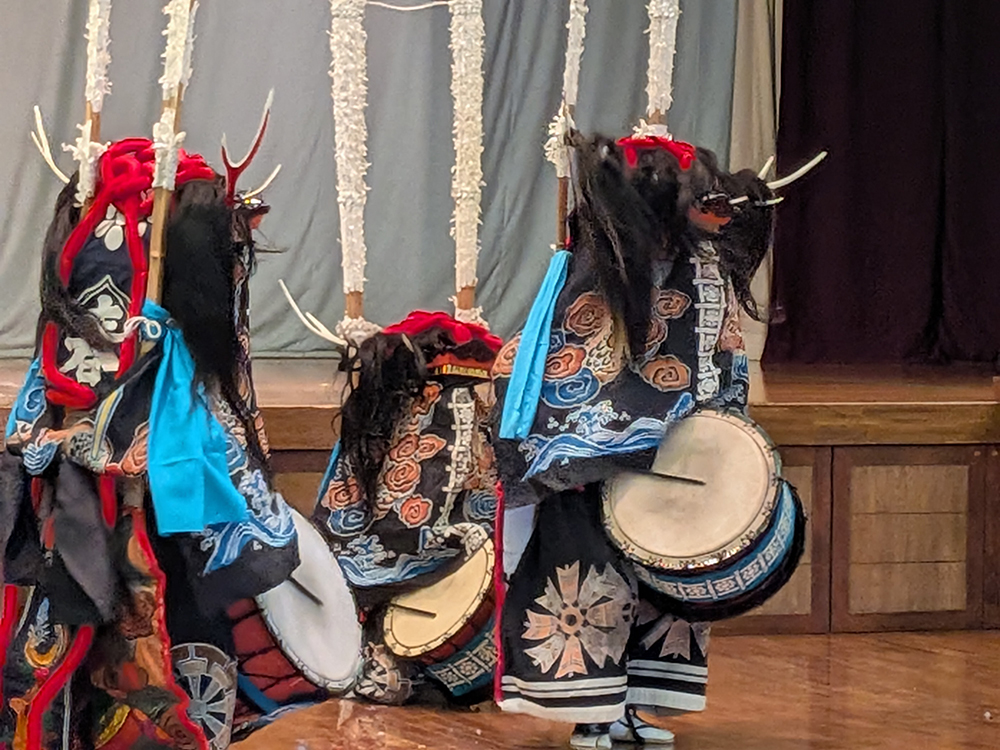
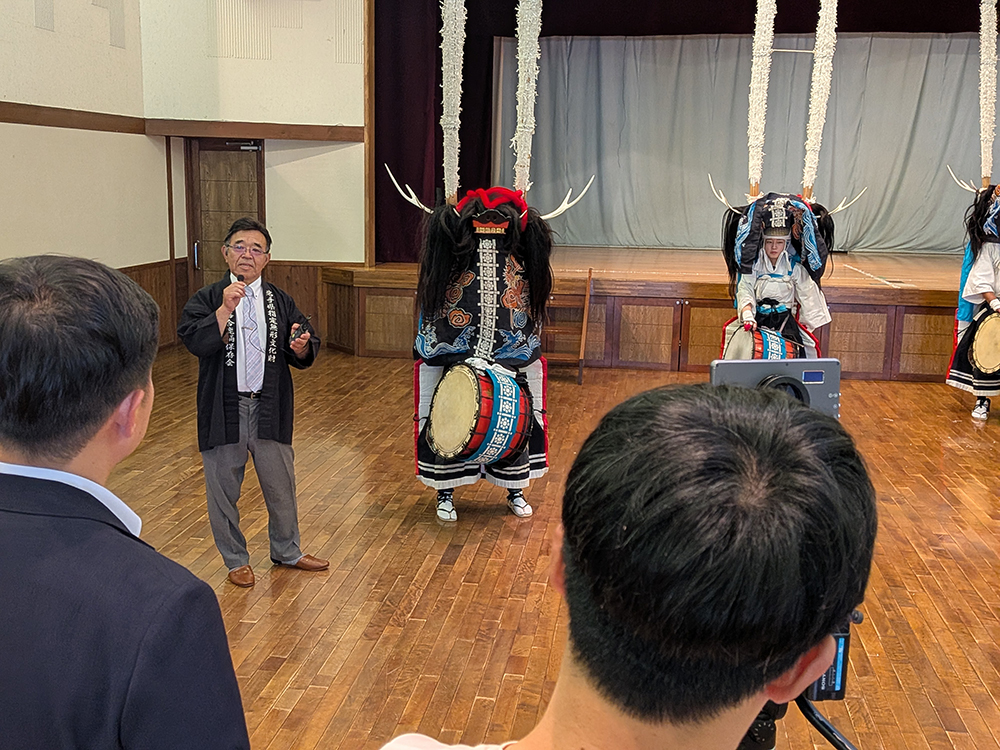
Next, the journalists watched a performance by the Kasuga Style Ochiai Shishi-odori Preservation Society, which uses the rubber waraji sandals made by Koyata Co., Ltd. The journalists enthusiastically took photos and videos of the performers dancing energetically while beating drums.
After the performance, Mr. Satsuo Ono, a member of the Kasuga Style Ochiai Shishi-odori Preservation Society, explained the history of the shishi-odori, which began approximately 1,000 years ago to put the spirits of deer to rest, and the journalists interviewed the performers about their opinions on the Koyata rubber waraji sandals they wore.
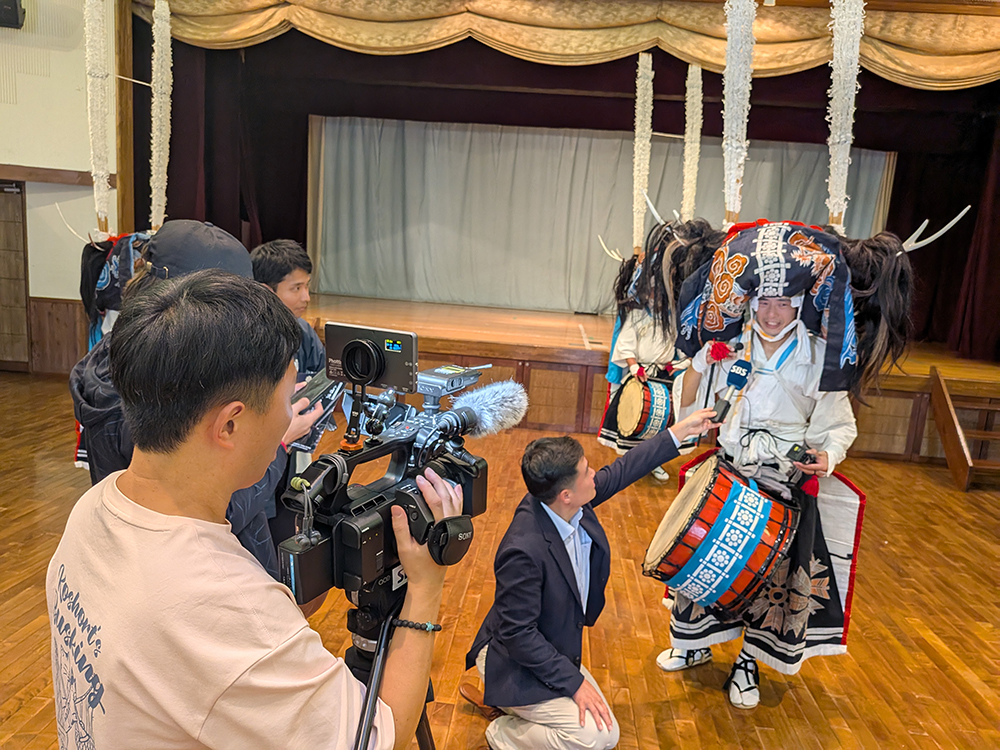
The journalists showed strong interest as they asked the performers questions about the weight of their masks, and how they usually practiced. There were even journalists borrowing the performers’ masks to try them on and see how heavy they were for themselves.
There were also journalists who interviewed Mr. Kosegawa of Koyata, and he discussed his idea to pass on to future generations how to dance the shishi-odori by making 3D scans of the performers as they danced, making it possible to learn from their 360-degree performances.
◆Below are some of the reports based on this tour.
Storm Media Group(Taiwan)
“大谷翔平的故鄉之旅!旅日新選擇 台灣直航岩手:看見傳統文化與創新的共生”(September 29)
Vietnam Television(Vietnam)
“Sắt truyền thống nhật bản vươn tầm thế giới”(October 7)
SBS(Korea)
“고령화에 위기 맞은 일본 전통공예, 최신 기술로 대응”(October 16)
France24(France) *Spanish service
“Iwate, la reconstrucción silenciosa del norte de Japón”(October 20)

