
OVERVIEW
- Tour Dates
- Thursday, November 27–Friday, November 28, 2025
- Place
- Shiga Prefecture
- Participants
- 8 participants
- Topics
- 1. The Lifestyles and Industries Nurtured by Lake Biwa, the Largest Lake in Japan
2. SMEs Nurtured by Mt. Ibuki, a Treasure Trove of Medicinal Plants
3. Production with Traditional Methods of Silk Thread and Silk Strings for Instruments
To promote Shiga Prefecture’s SMEs and local resources overseas, a press tour was held to cover the lifestyles and industries around Lake Biwa, Japan’s largest lake; SME’s benefitting from Mt. Ibuki, long known for its medicinal herbs; and silk, as well as silk strings for instruments made using traditional methods.
A total of eight journalists participated in the press tour, from media based in China, Germany/Switzerland, Vietnam, and the US/Saudi Arabia.
*This tour was sponsored by the Shiga Prefectural Federation of Societies of Commerce and Industry, and planned and operated by the FPCJ.
*For more details on the tour, see the tour notice here.
Day 1
<Saiki Sangyo Co., Ltd./FLOAT Co., Ltd.>
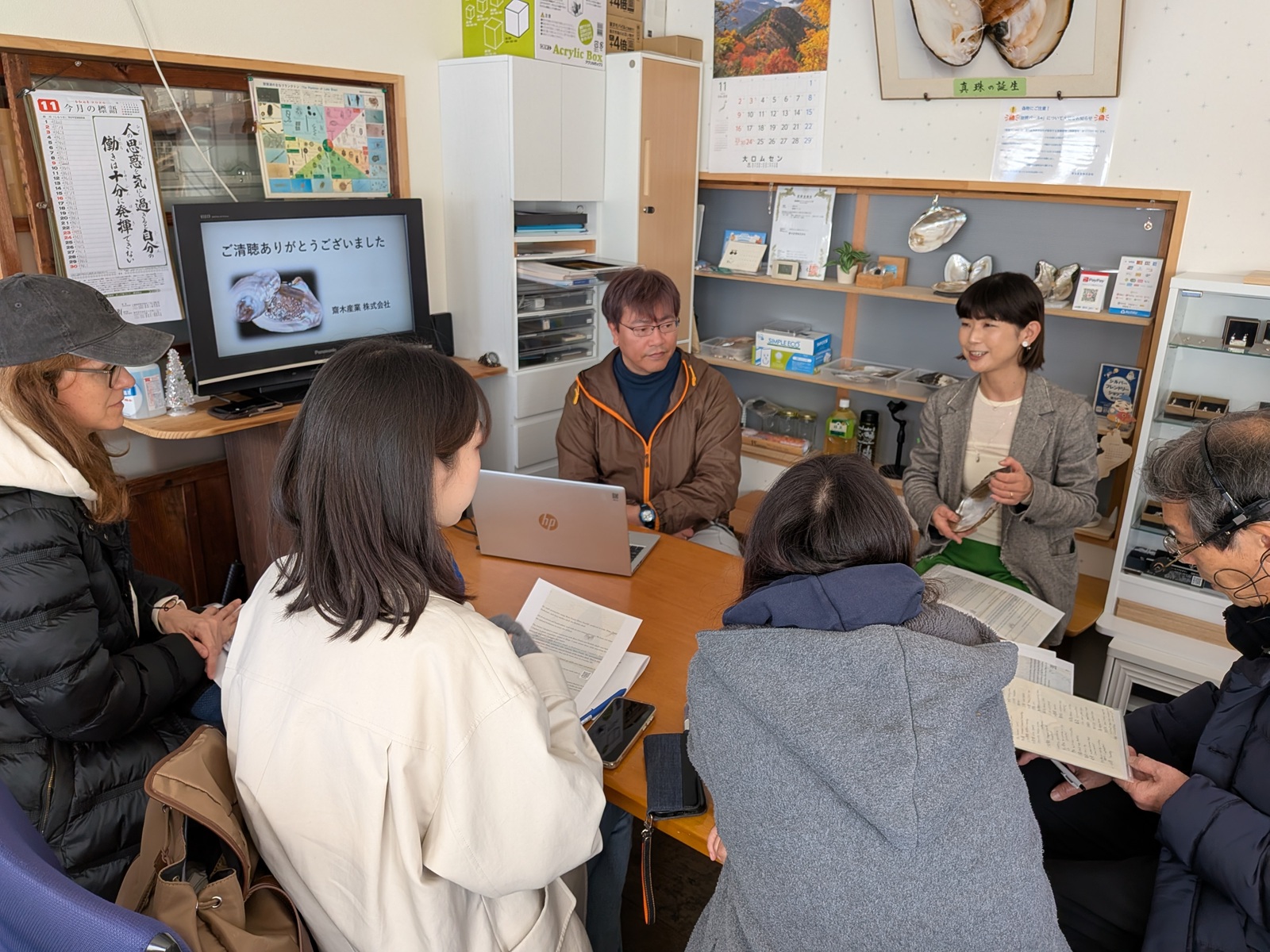
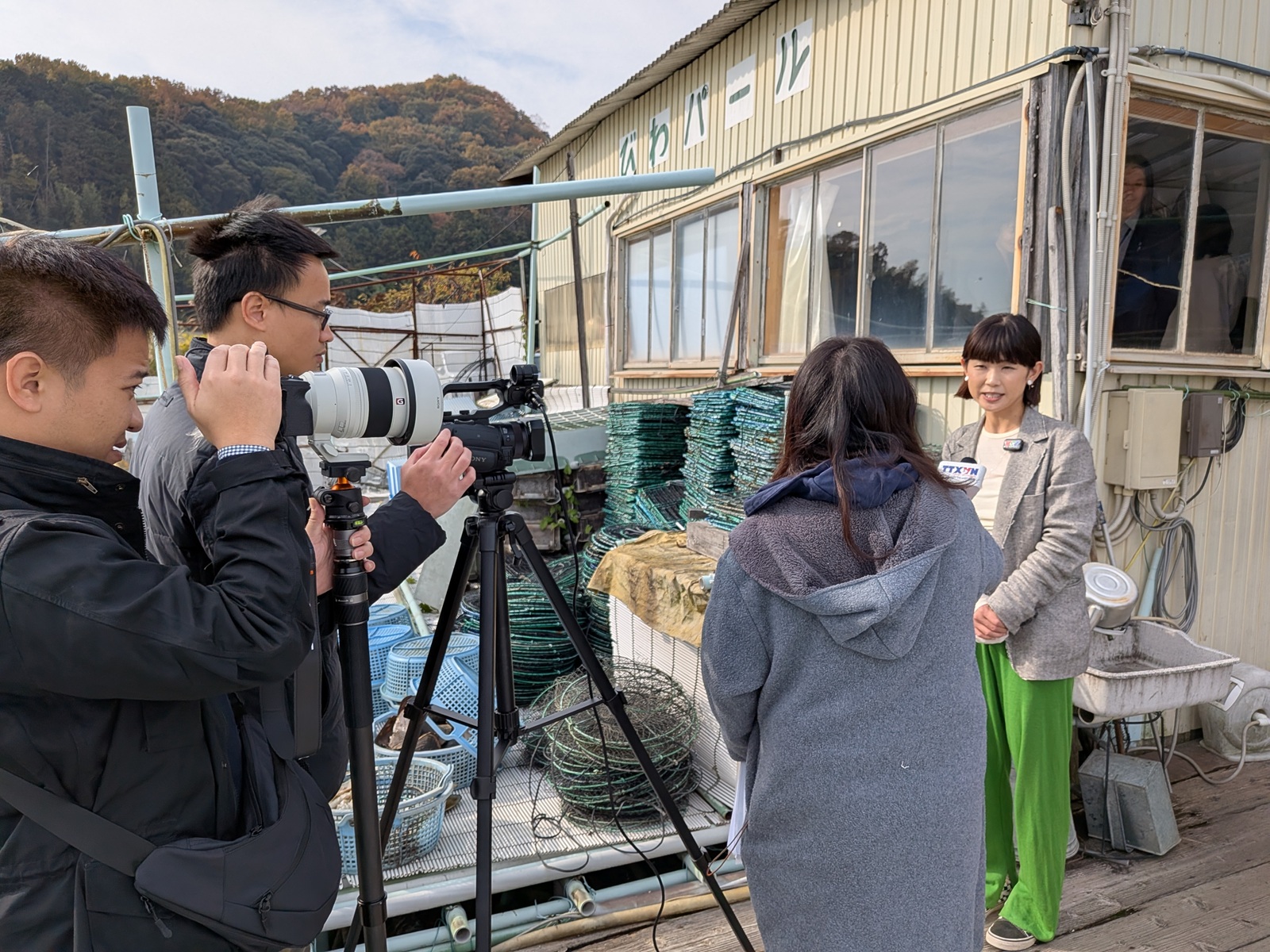
First, the journalists visited Saiki Sangyo Co., Ltd. at Lake Nishinoko, a small lake connected to Lake Biwa. Since 1959, Saiki Sangyo has been producing freshwater pearls by farming freshwater mussels. After an explanation from Mr. Masakazu Saiki, CEO of Saiki Sangyo, about pearl farming, the tour heard from Ms. Kaoru Sawa of FLOAT Co., Ltd., which makes accessories using mussel shells and pearls produced by Saiki Sangyo, about FLOAT’s business.
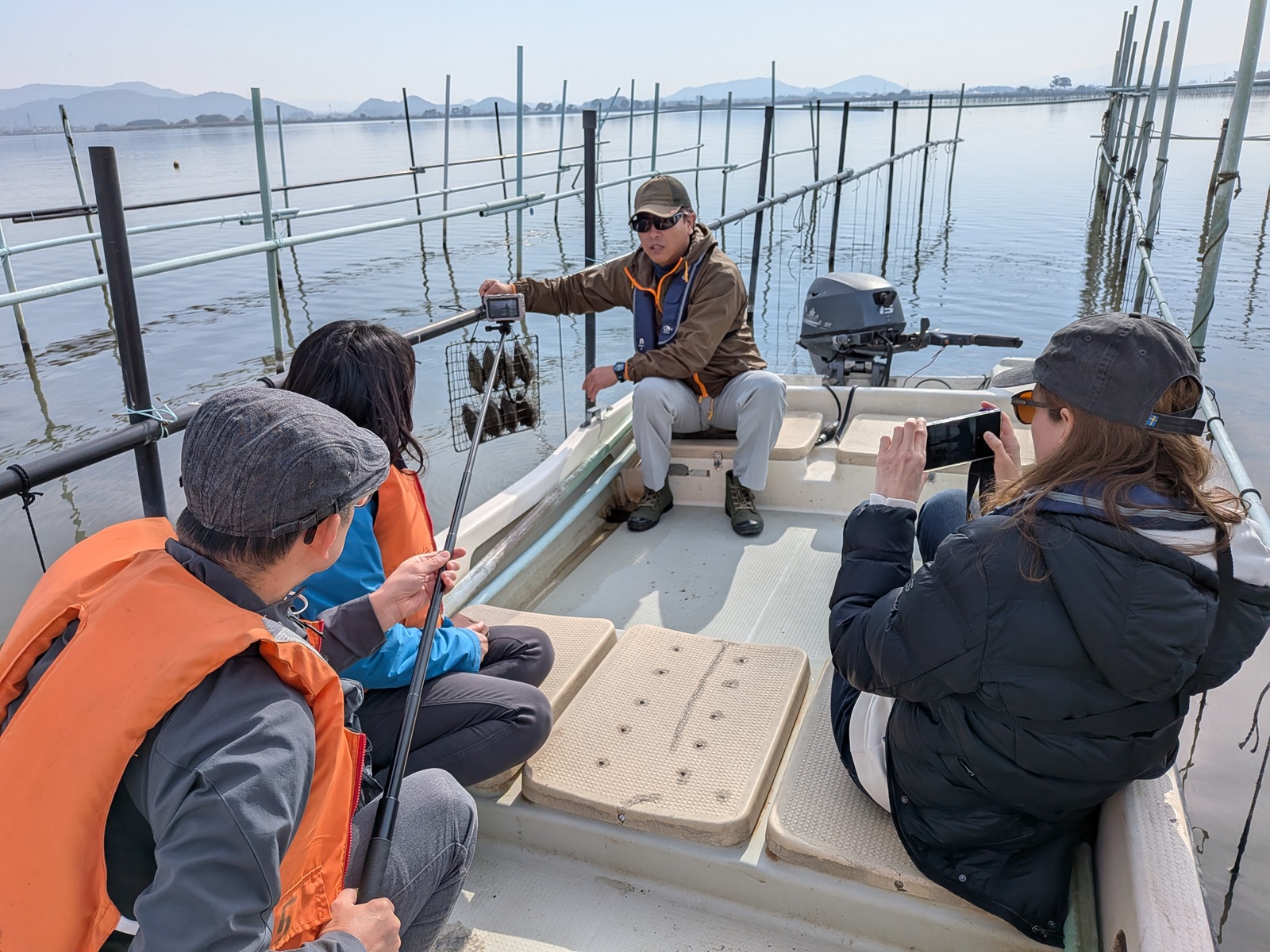
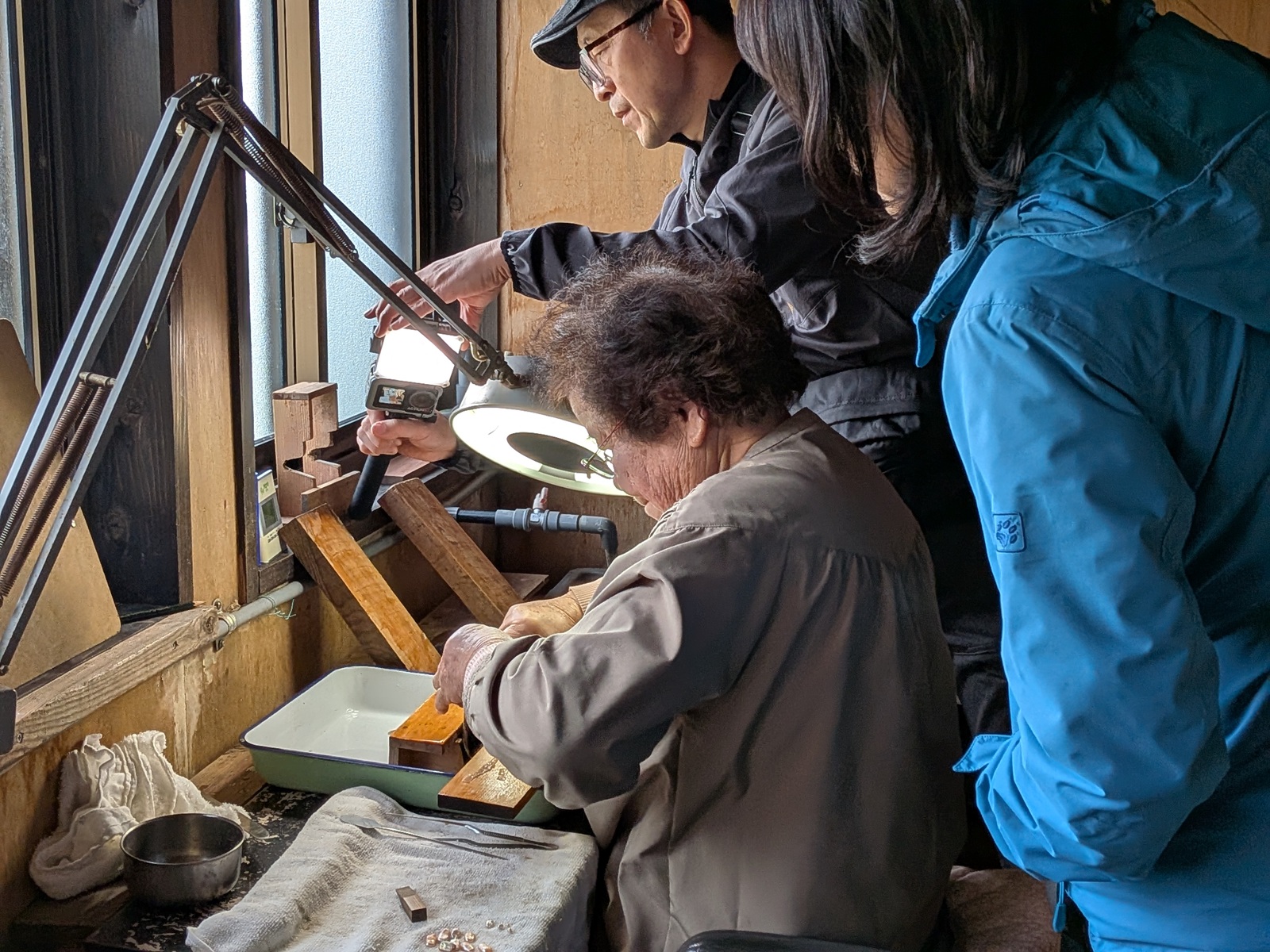
Next, the journalists went out onto Lake Nishinoko in a motorboat and saw mussels being farmed on racks in the lake. Ms. Tamiko Saiki, the mother of Mr. Masakazu Saiki, demonstrated removing a pearl from a mussel, as well as inserting tissue into a mussel.
The journalists asked questions about collaboration with academic institutions such as universities regarding pearl farming and the shortage of younger workers, with Mr. Saiki responding that they were looking for solutions through a process of trial and error while facing issues such as climate change and the lack of workers. They also asked Ms. Sawa about why she began making accessories and what she paid special attention to when making them.
<Omi Hachiman Municipal Museum (Former Residence of the Nishikawa Clan) and Hachiman-bori (Omi Hachiman Tourism Association) >
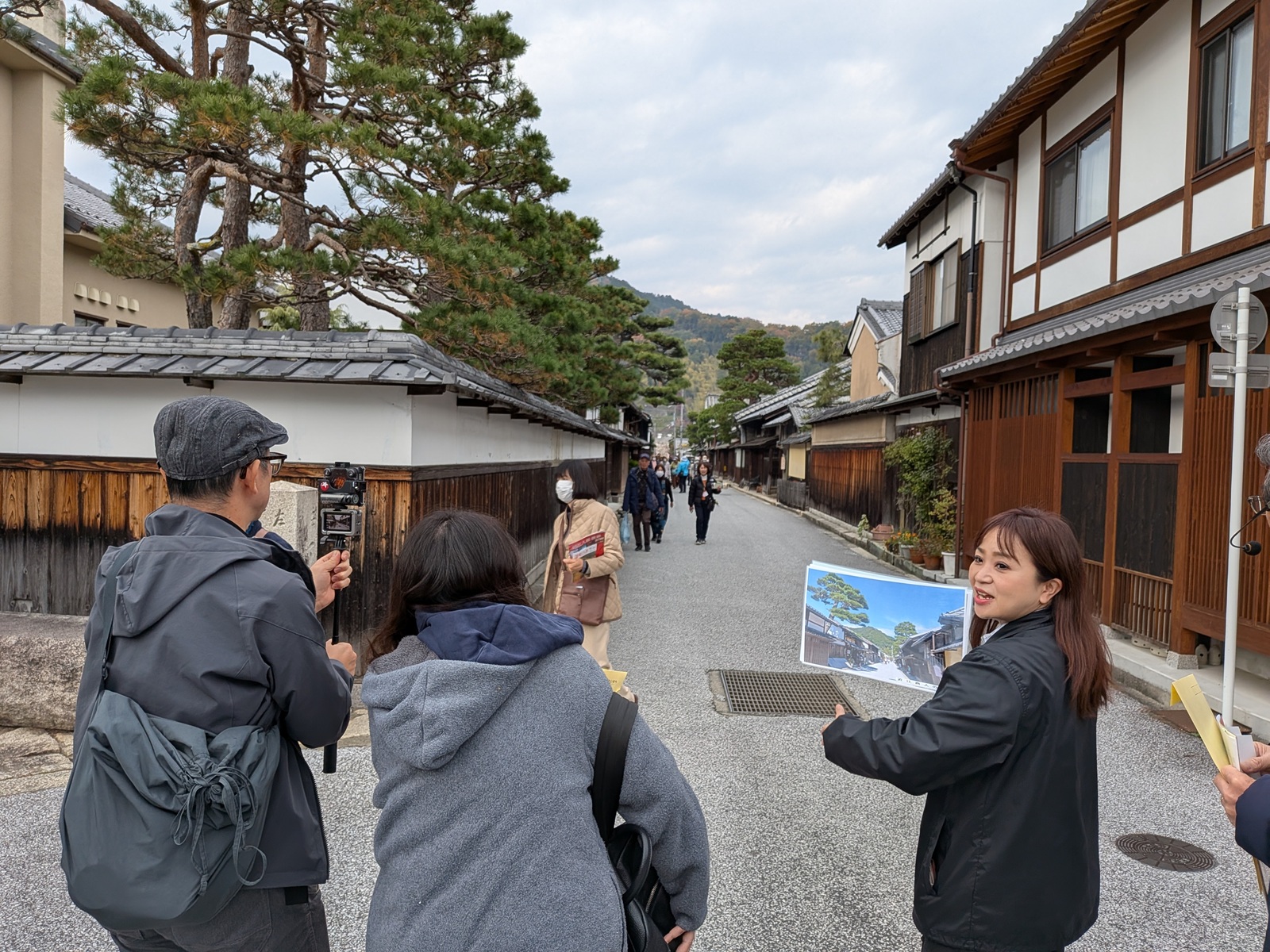
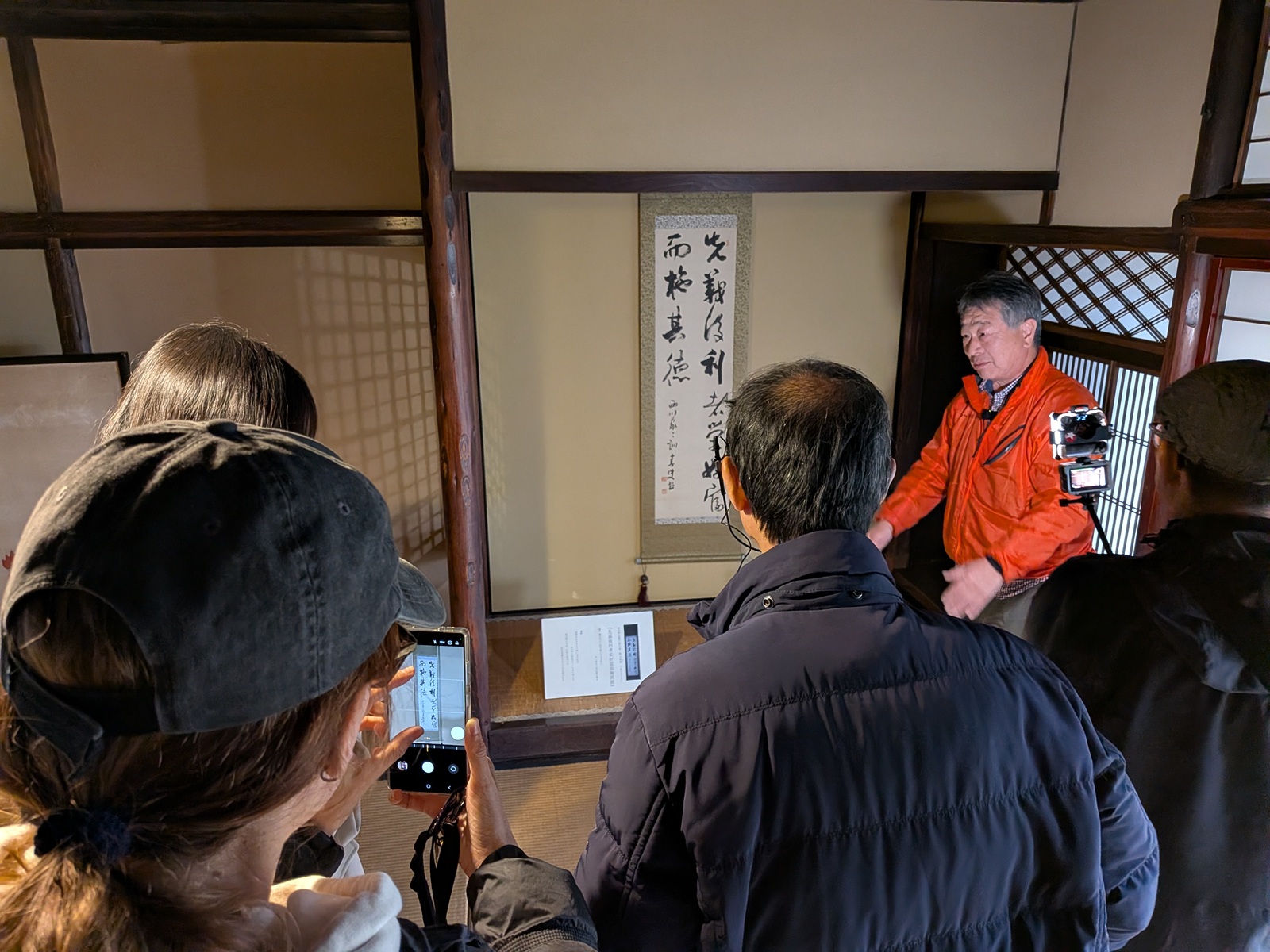
Omi Hachiman is the home of the Omi merchants, who built the foundations of Japan’s economy by doing business around the country from the Edo period (1603–1868). Guided by Ms. Masayo Shiraishi, deputy secretary general of the Omi Hachiman Tourism Association, the journalists toured the town with its traditional architecture that has been preserved, and went to the Omi Hachiman Municipal Museum (the former residence of the Nishikawa Clan) where they learned about the history and philosophy of the Omi merchants from the museum’s director, Mr. Masaharu Maesaka.
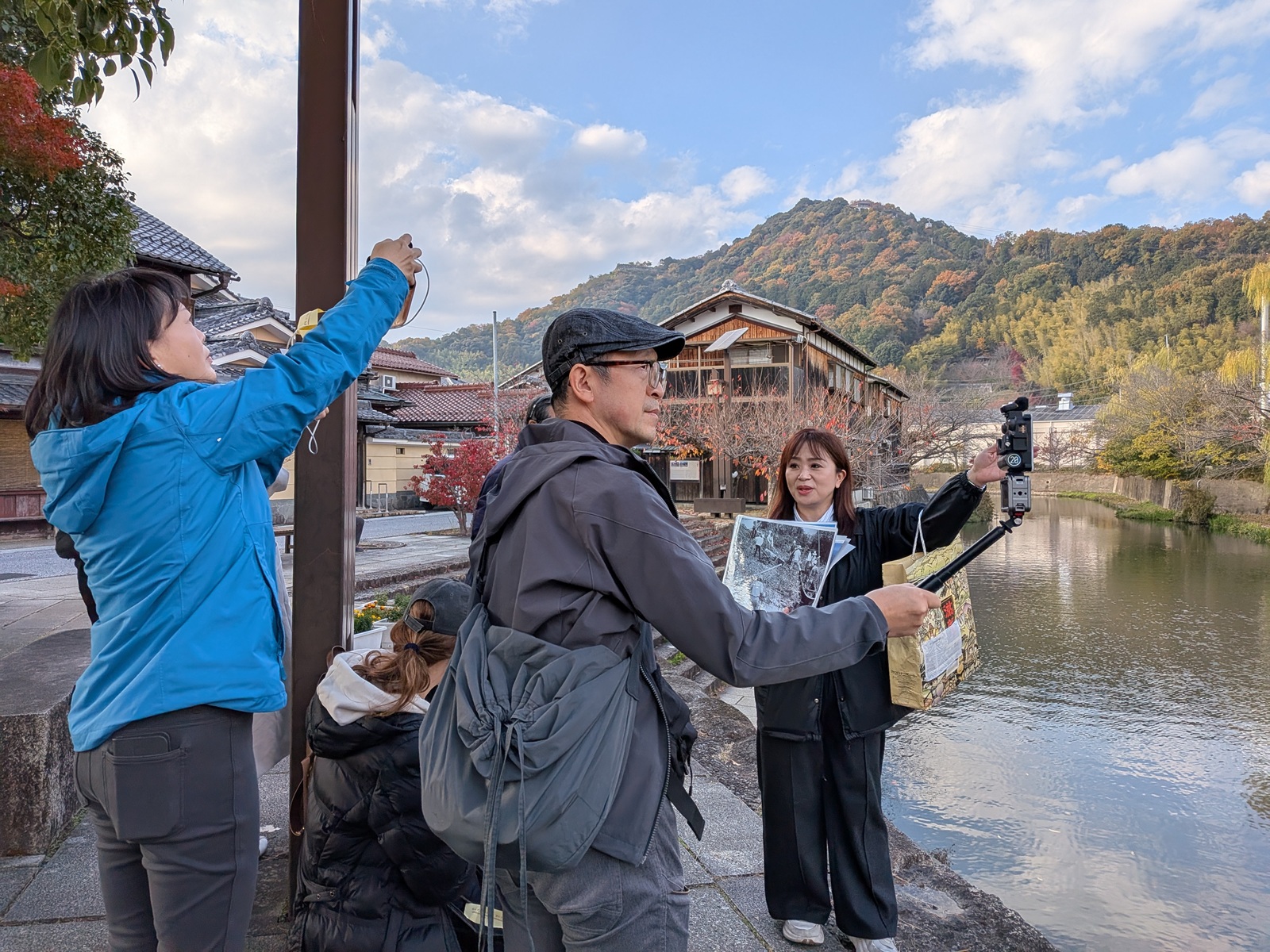
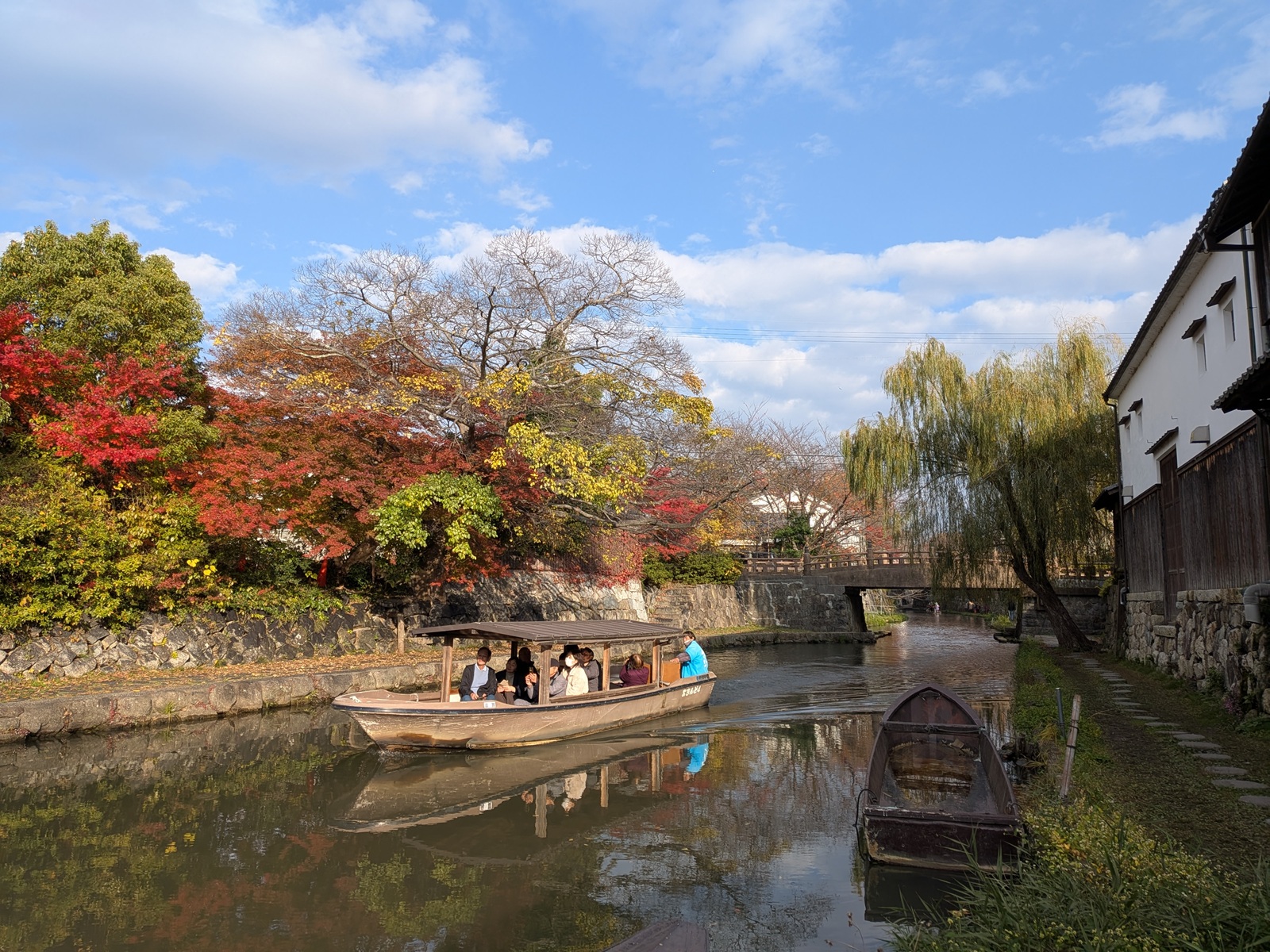
Next, the journalists visited the Hachiman-bori canal, constructed by Toyotomi Hidetsugu (who ruled the area during the Warring States period) and connected to Lake Biwa. The tour heard from Ms. Shiraishi about how the canal grew polluted in the late 1950s, but regained its former beauty thanks to efforts by local community groups.
The journalists showed interest in the amenities and daily goods people had in their residences in the past, asking questions about daily life such as how people stayed warm as they thought about history. The journalists also enthusiastically took pictures of the Hachiman-bori, surrounded by trees in their fall colors.
<Specified Non-profit Corporation Maruyoshi>
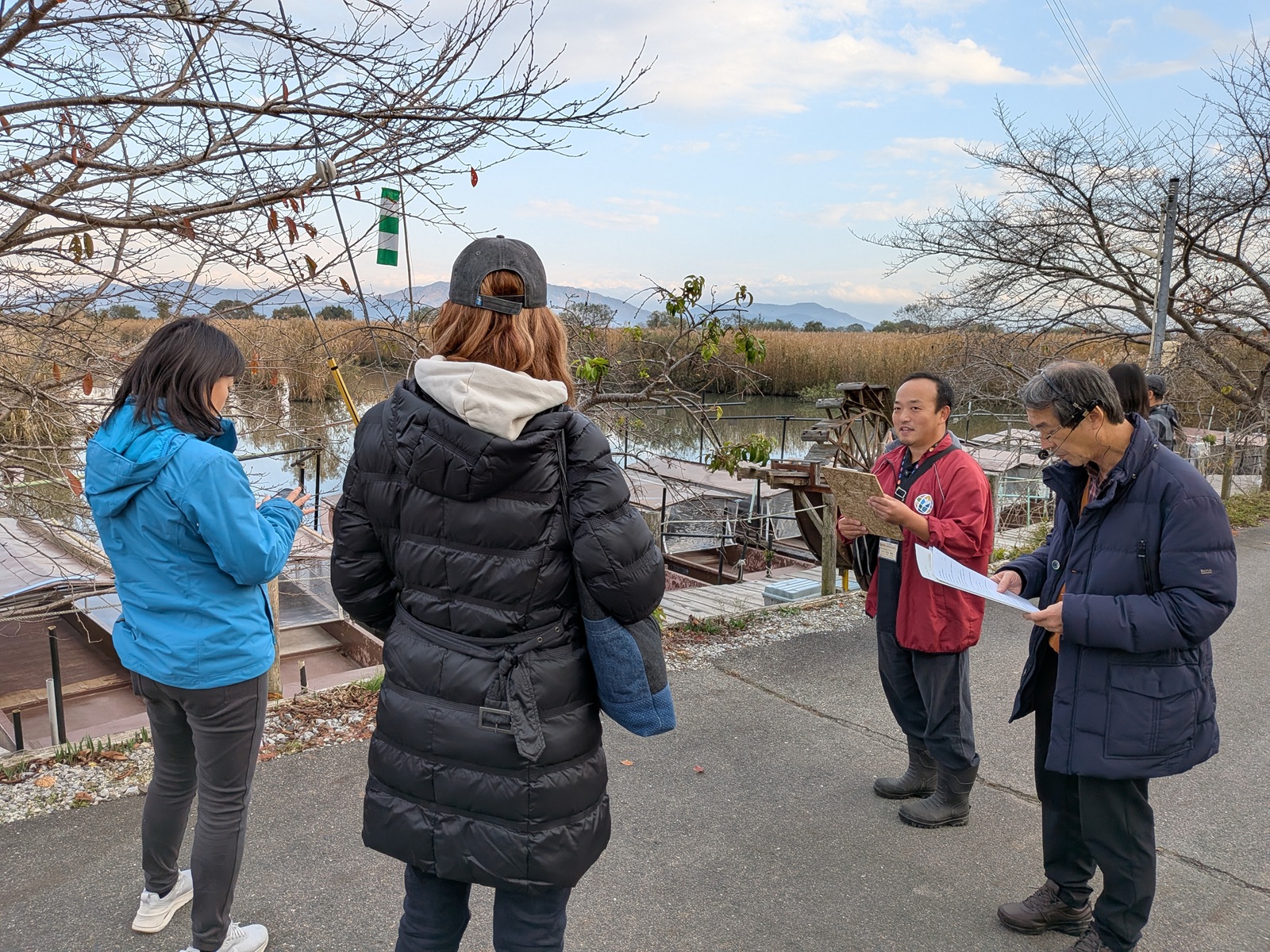
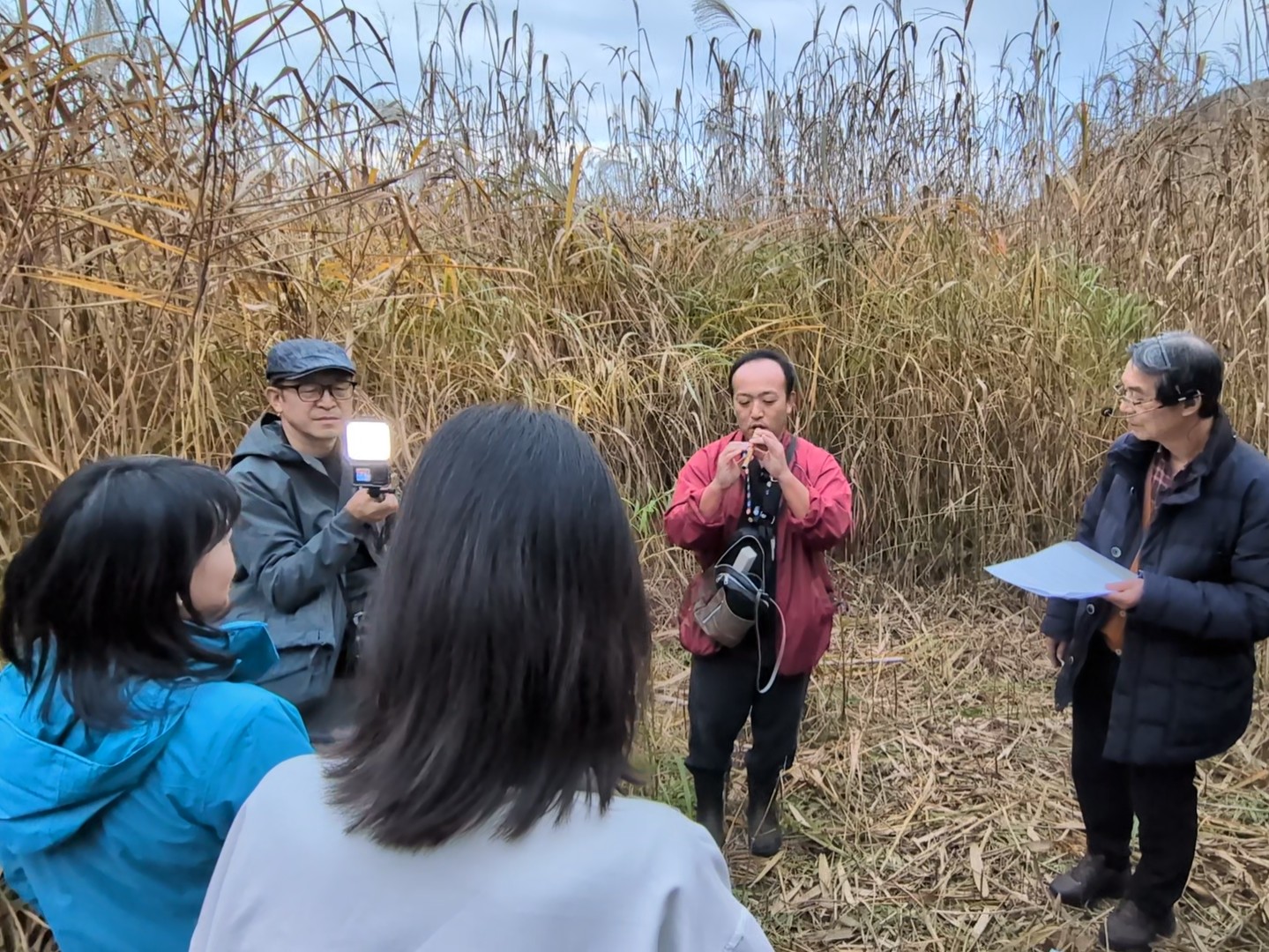
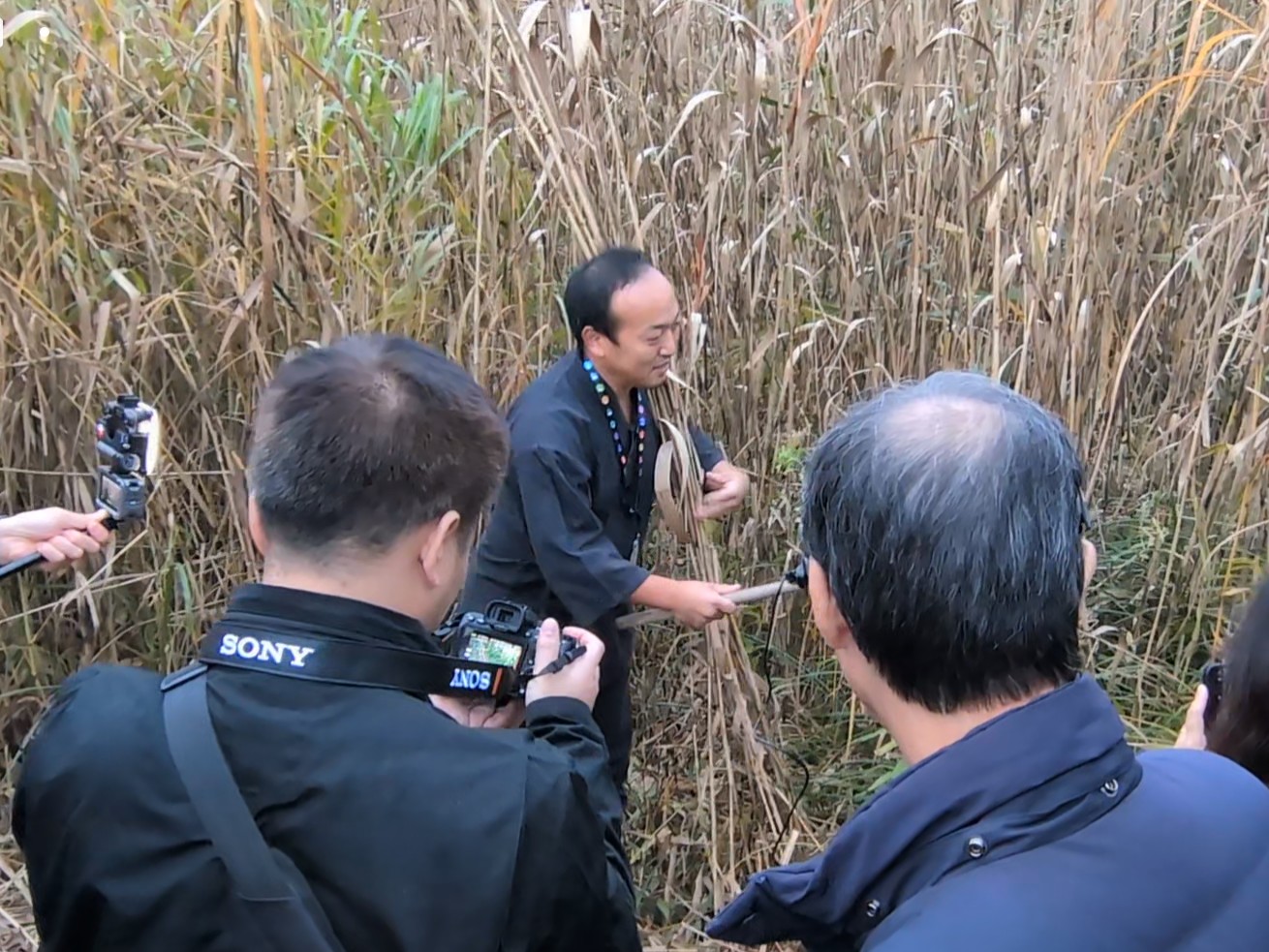
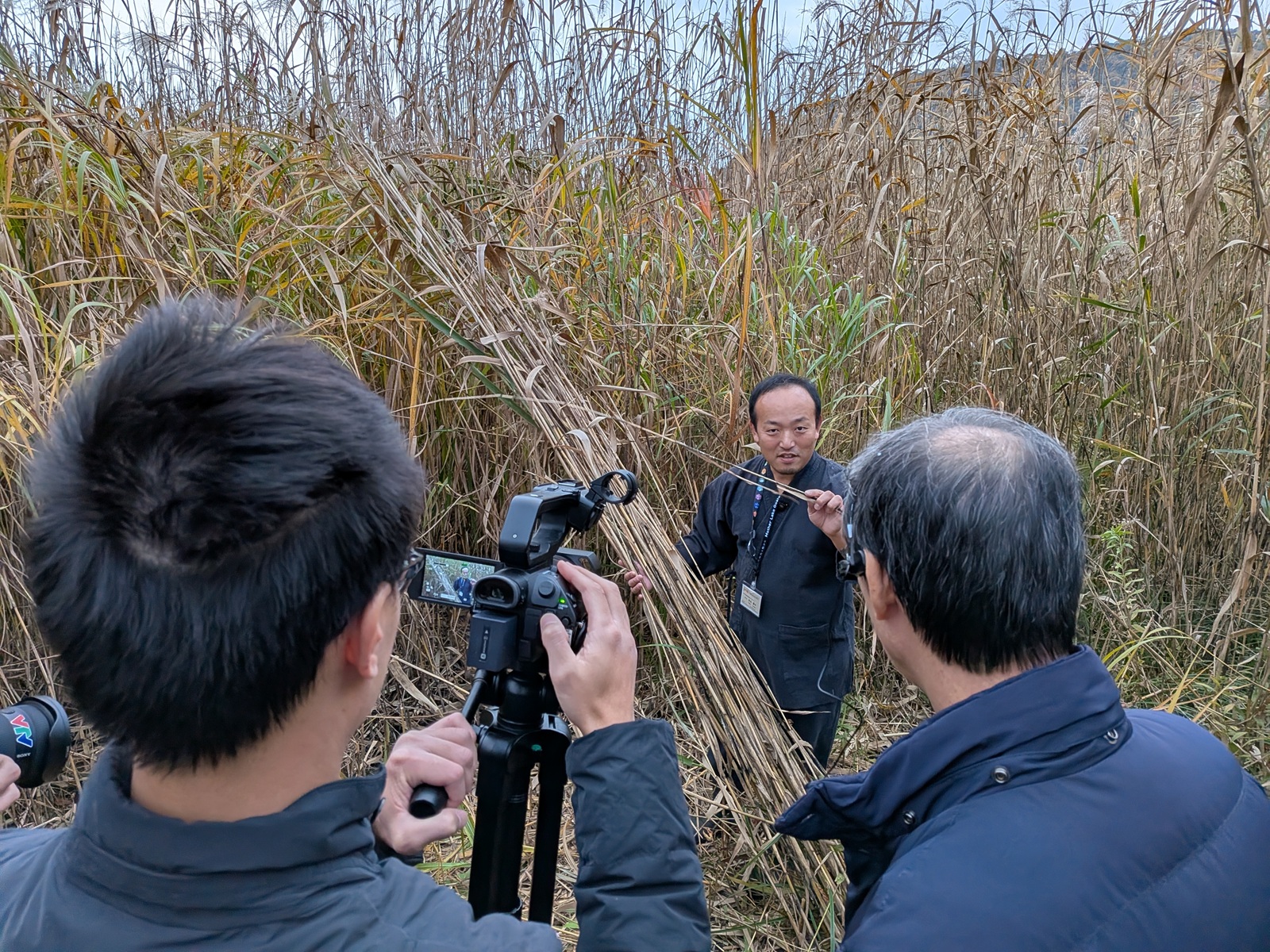
To learn more about the environment and resources of Lake Biwa which support the industries of Shiga Prefecture, the tour met with Mr. Yosuke Miyao of the specified non-profit corporation Maruyoshi, which is involved in efforts for the conservation and utilization of reed beds around Lake Biwa. After hearing about Mr. Miyao’s efforts, the tour went to a full-grown reed bed before harvest, and in addition to seeing products such as boards made from reed and hearing a performance from a flute made from reed, filmed and photographed the harvest.
The journalists asked questions about what required special care when managing the reeds, cooperation from local residents including children and youth on the conservation activities, and whether the government provided any subsidies for the conservation efforts.
<Hon Nigorobuna Senmon Io>
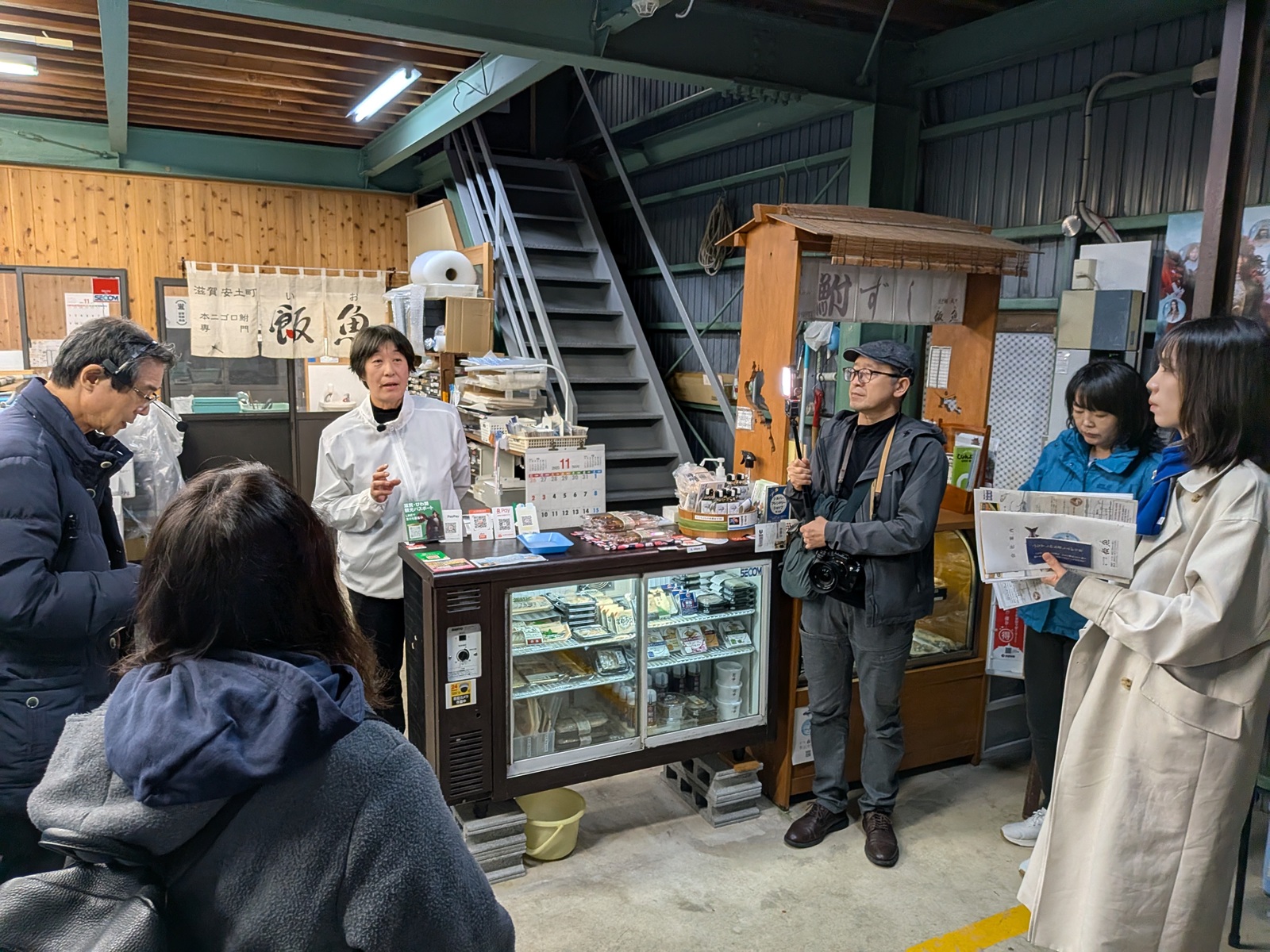
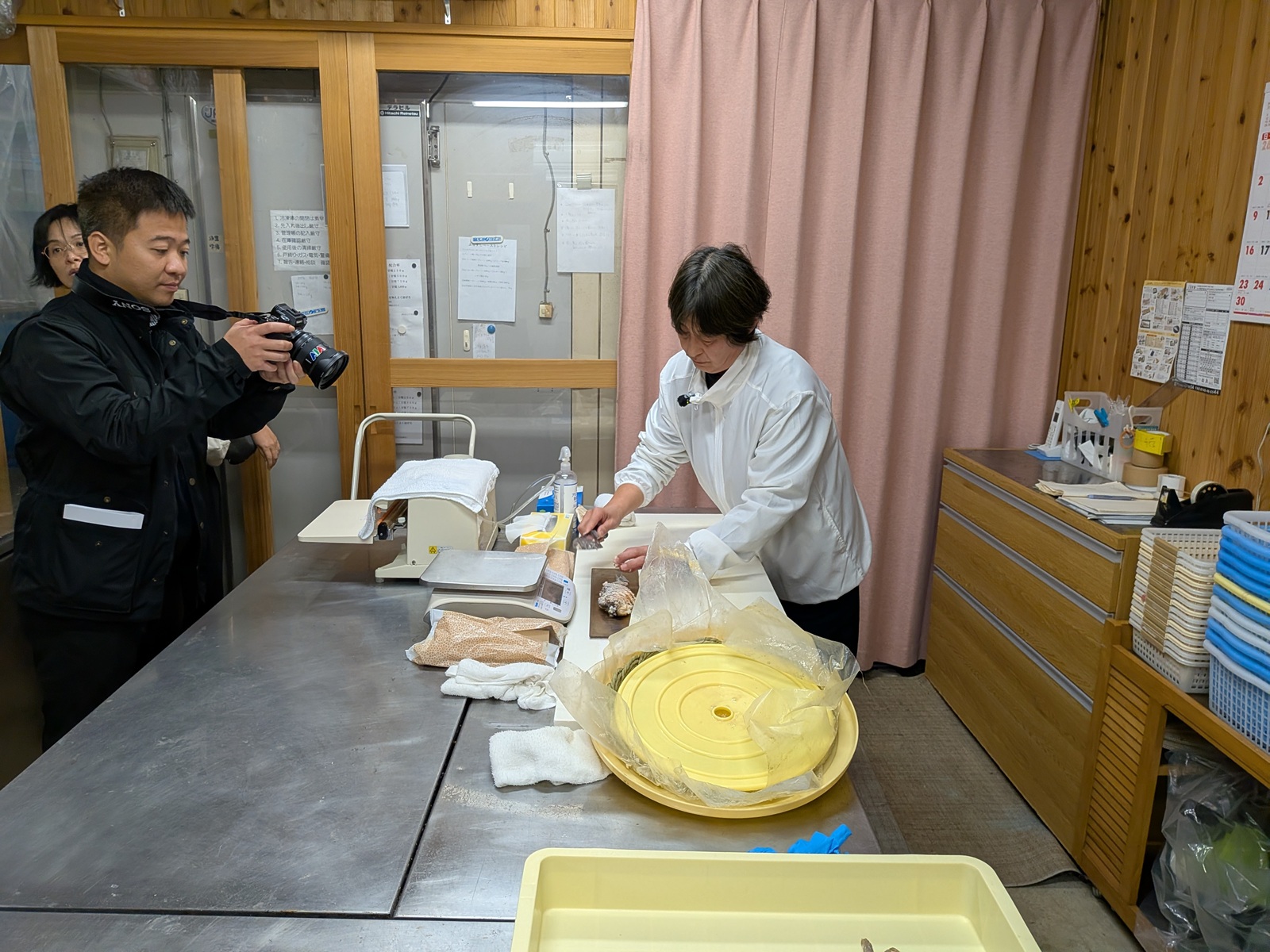
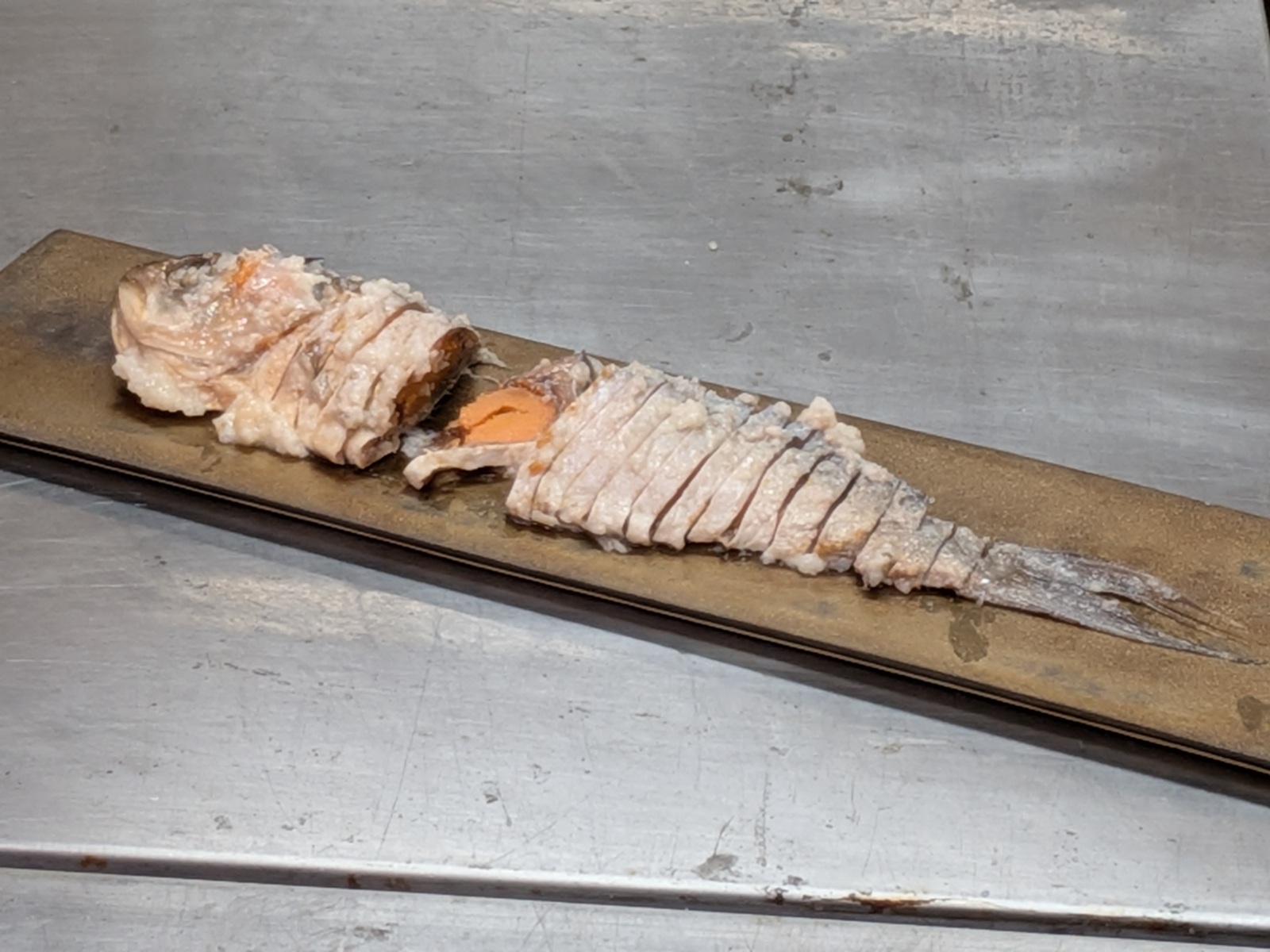
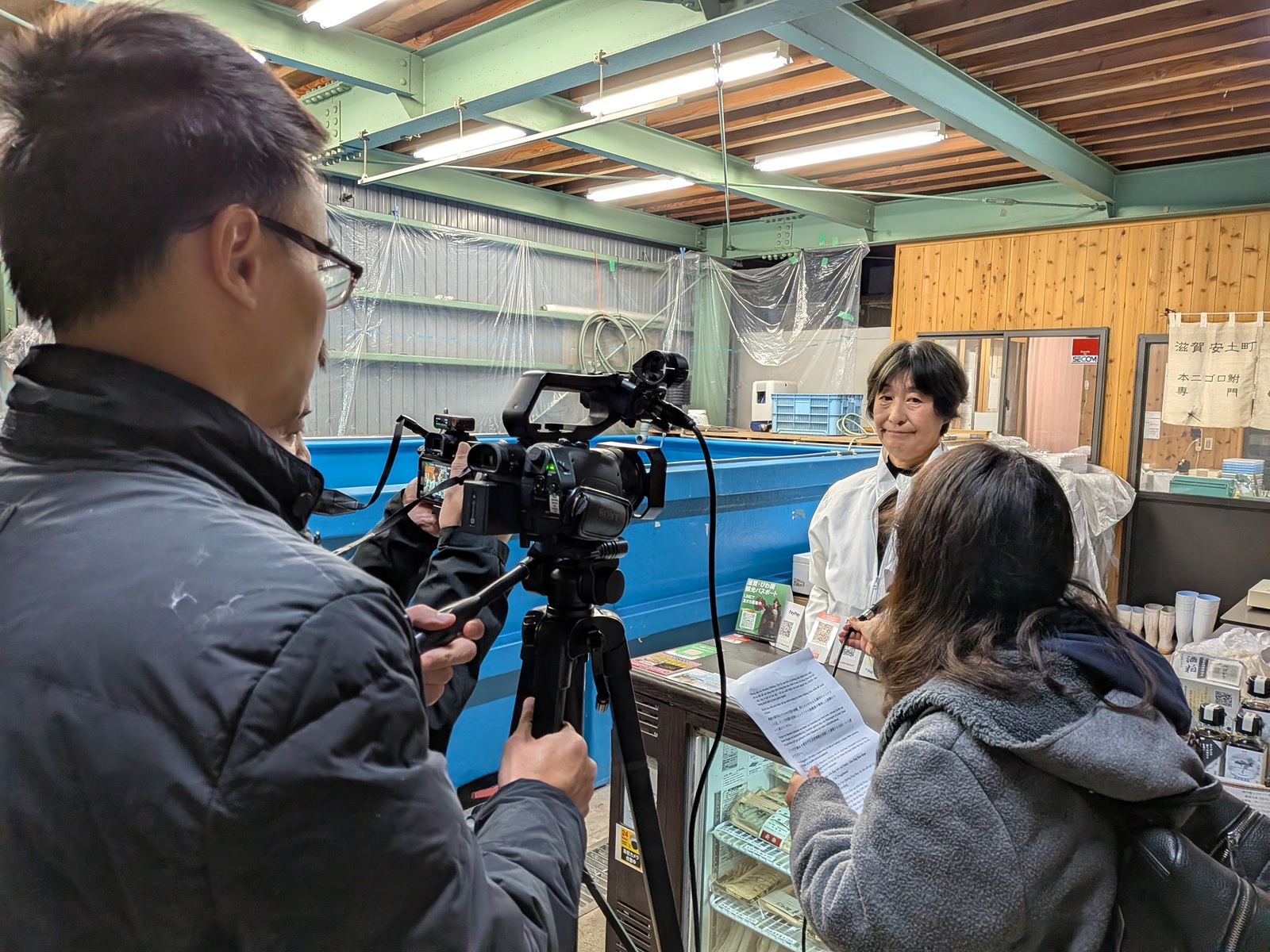
Next, the tour visited Hon Nigorobuna Senmon Io in Azuchi, Shiga. The journalists heard from Ms. Masako Oshima, the head of Hon Nigorobuna Senmon Io, about the history of funazushi, a local dish from Shiga. She also told them about how in response to the decline in the catch of nigorobuna, a species of crucian carp endemic to Lake Biwa which is used to make funazushi, after a process of trial and error she became the first in Japan to successfully farm nigorobuna.
Next, the tour heard about the traditional process for making funazushi. After being told about the unique flavor it develops from fermentation and the health benefits of lactic acid bacteria, the tour was able to sample some funazushi which had just been removed from the bucket it was prepared in.
The journalists asked Ms. Oshima a number of questions, about challenges she faced during her unprecedented efforts, her struggle to simultaneously make products and sell them, and what she thought as a woman business owner about how society was changing and women having a larger role in society.
Day 2
<Filming/Photographing on Lake Biwa’s Shore>
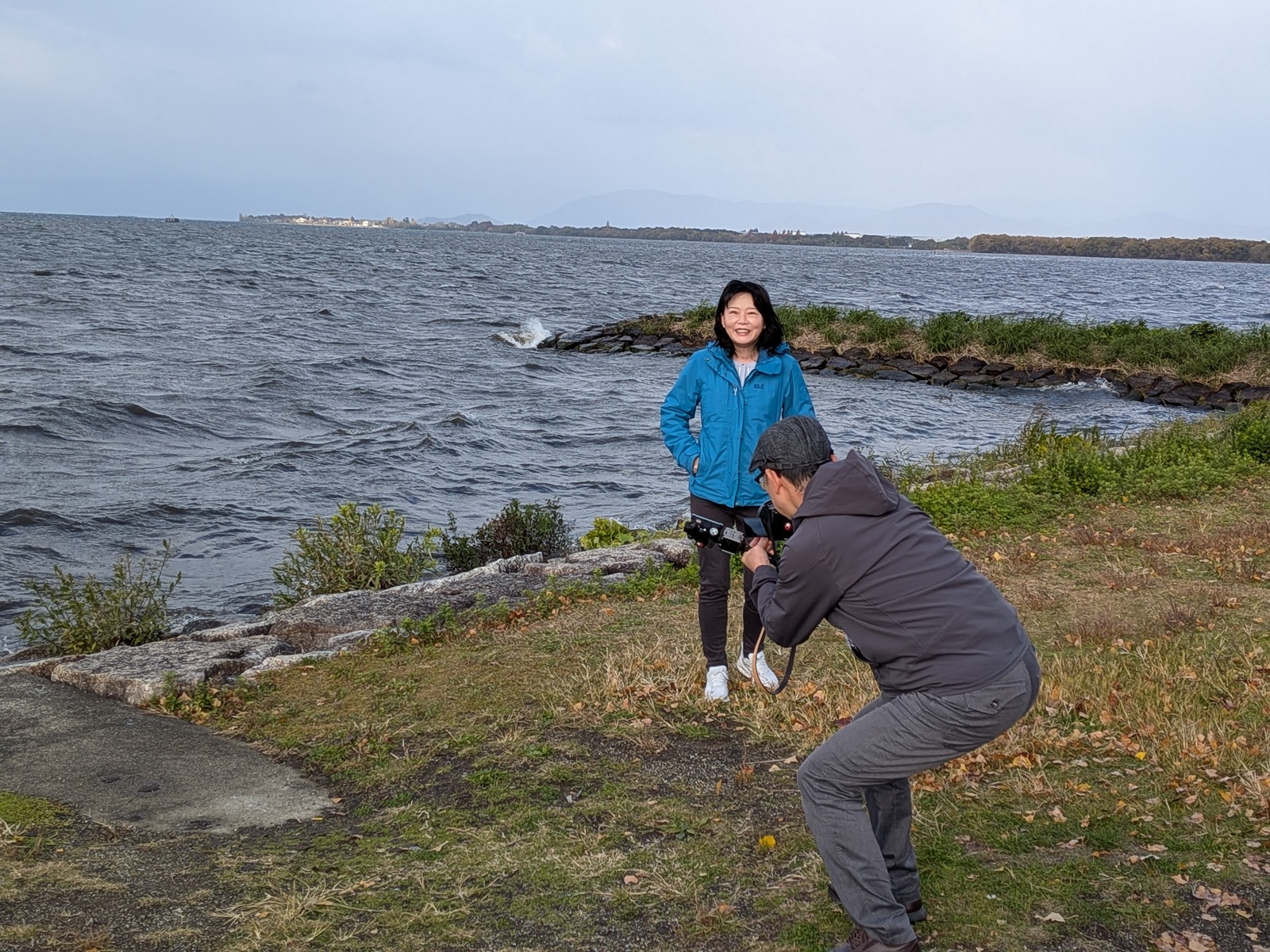
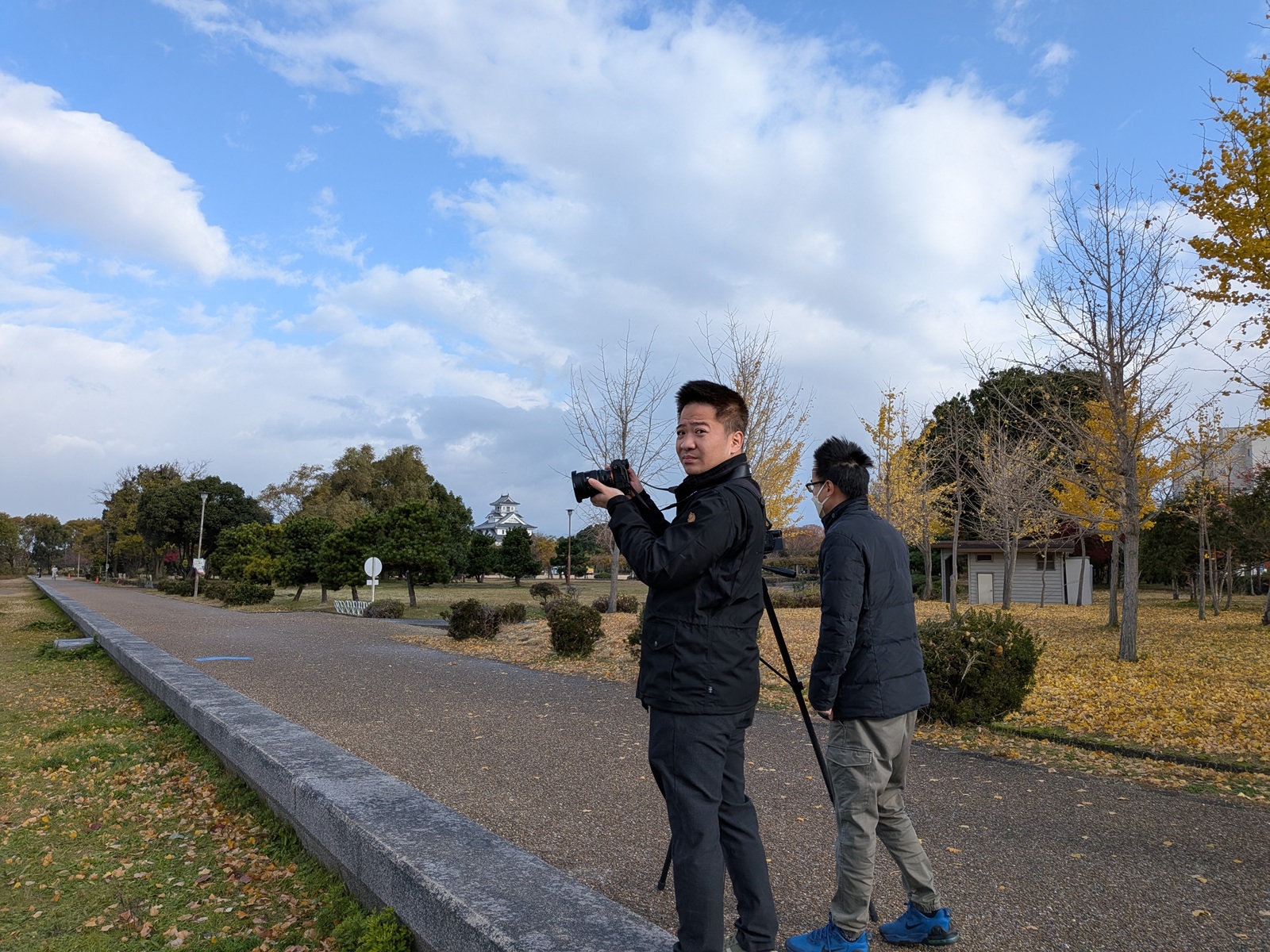
On the morning of the second day, the journalists visited Hokoen Park in Nagahama, where the fall colors of the gingko trees had reached their peak, and filmed and photographed along the shore of Lake Biwa. In a lucky coincidence, local volunteers were cleaning up along the shore, and so the tour was also able to see beautification efforts for the preservation of Lake Biwa’s environment, matching the topic of the press tour.
<Yamasho Co., Ltd.>
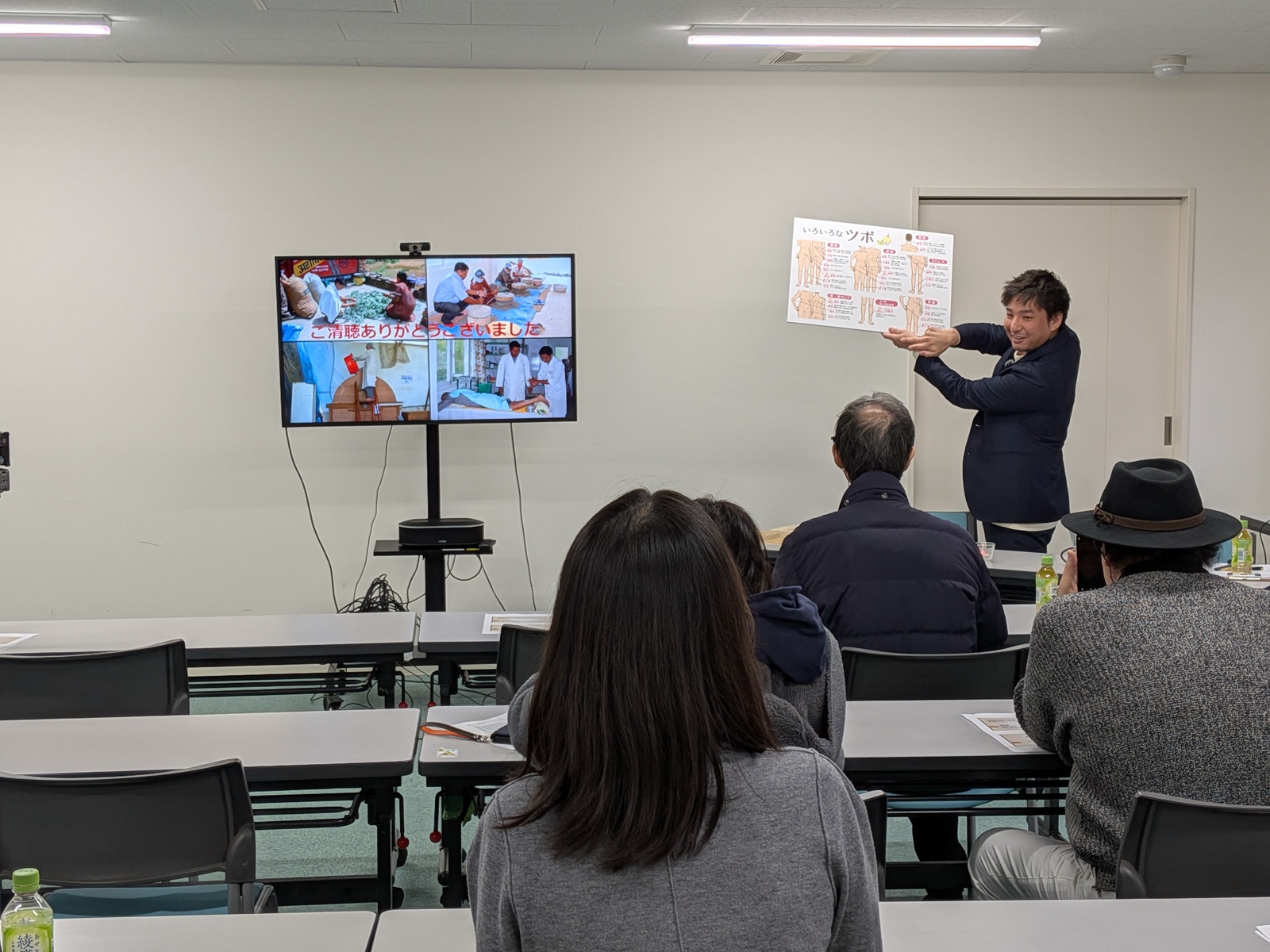
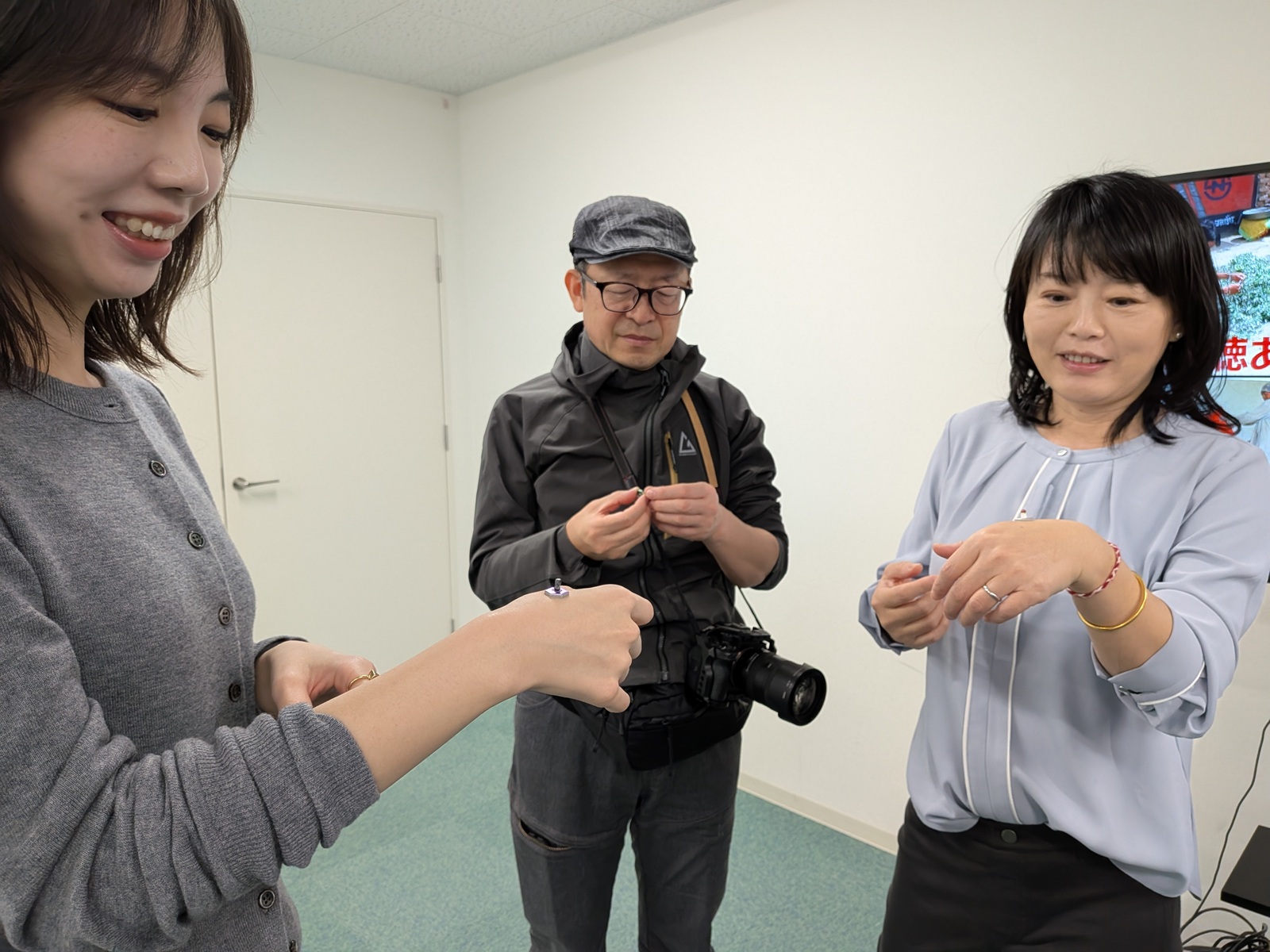
The journalists visited Yamasho Co., Ltd., a long-standing company in Nagahama, Shiga which makes moxa for use in moxibustion. Company director Mr. Tatsuki Oshitani explained the history of moxa production and the traditional medicinal herb culture around Mt. Ibuki, as well as explaining production methods and the concept of pressure points in Eastern medicine. Journalists from countries with less context for Eastern medicine seemed particularly interested in this concept. The journalists experienced moxibustion for themselves, gaining a deeper understanding of what it felt like and the effects of its heat.
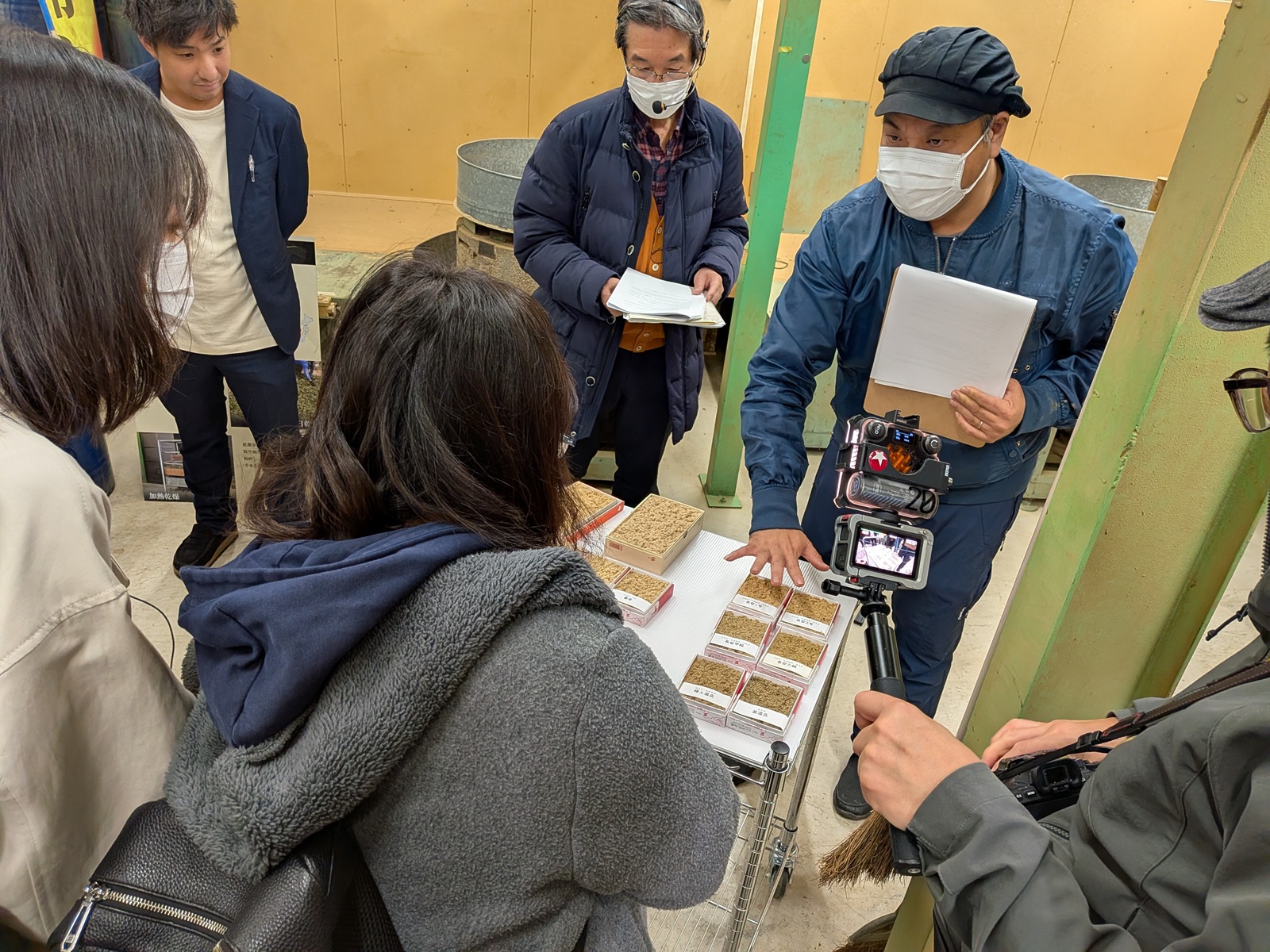
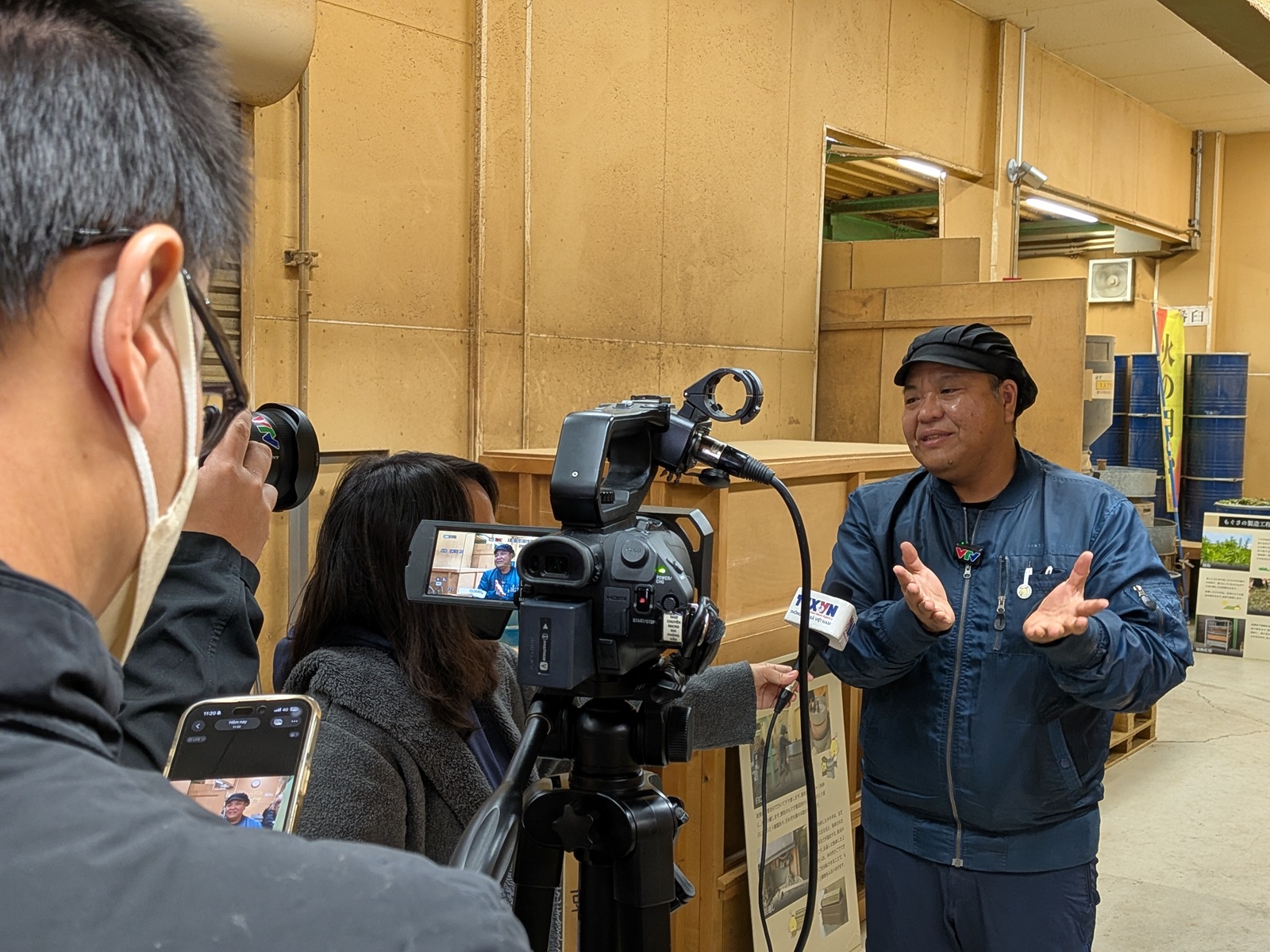
Next, the tour went to Yamasho’s factory and heard from factory head Mr. Takashi Maekawa about how moxa is made. The journalists asked questions about where the mugwort used to make moxa grows and about any differences in quality and effectiveness based on price. Mr. Maekawa responded that moxa was made in a variety of places and at different price points, and that a higher price did not necessarily mean the product was more effective.. Instead, each product burned at a different temperature and speed, and had a different scent, so using them appropriately was important for treatment, according to Mr. Maekawa.
<Ibuki Farm Co., Ltd.>
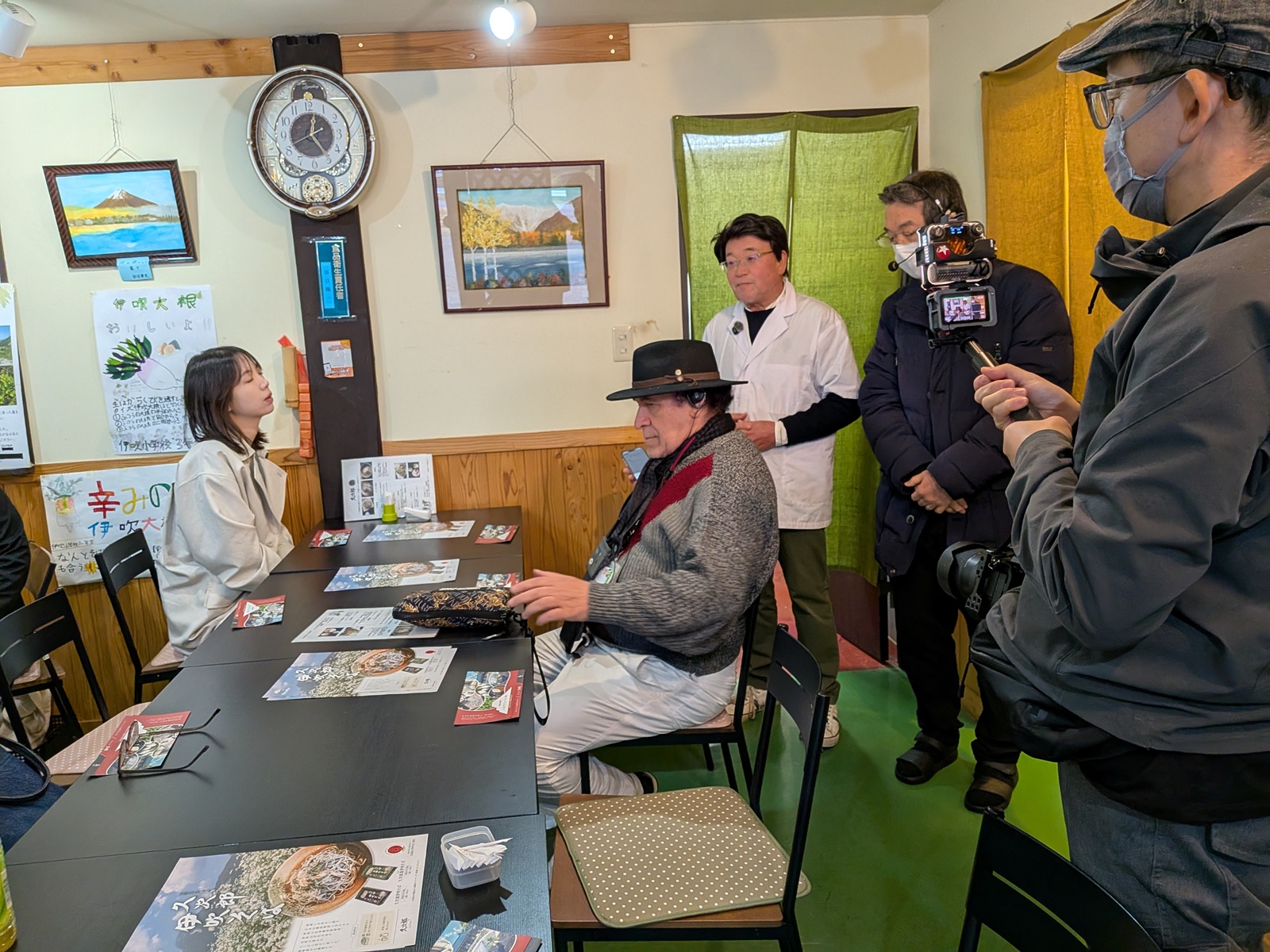
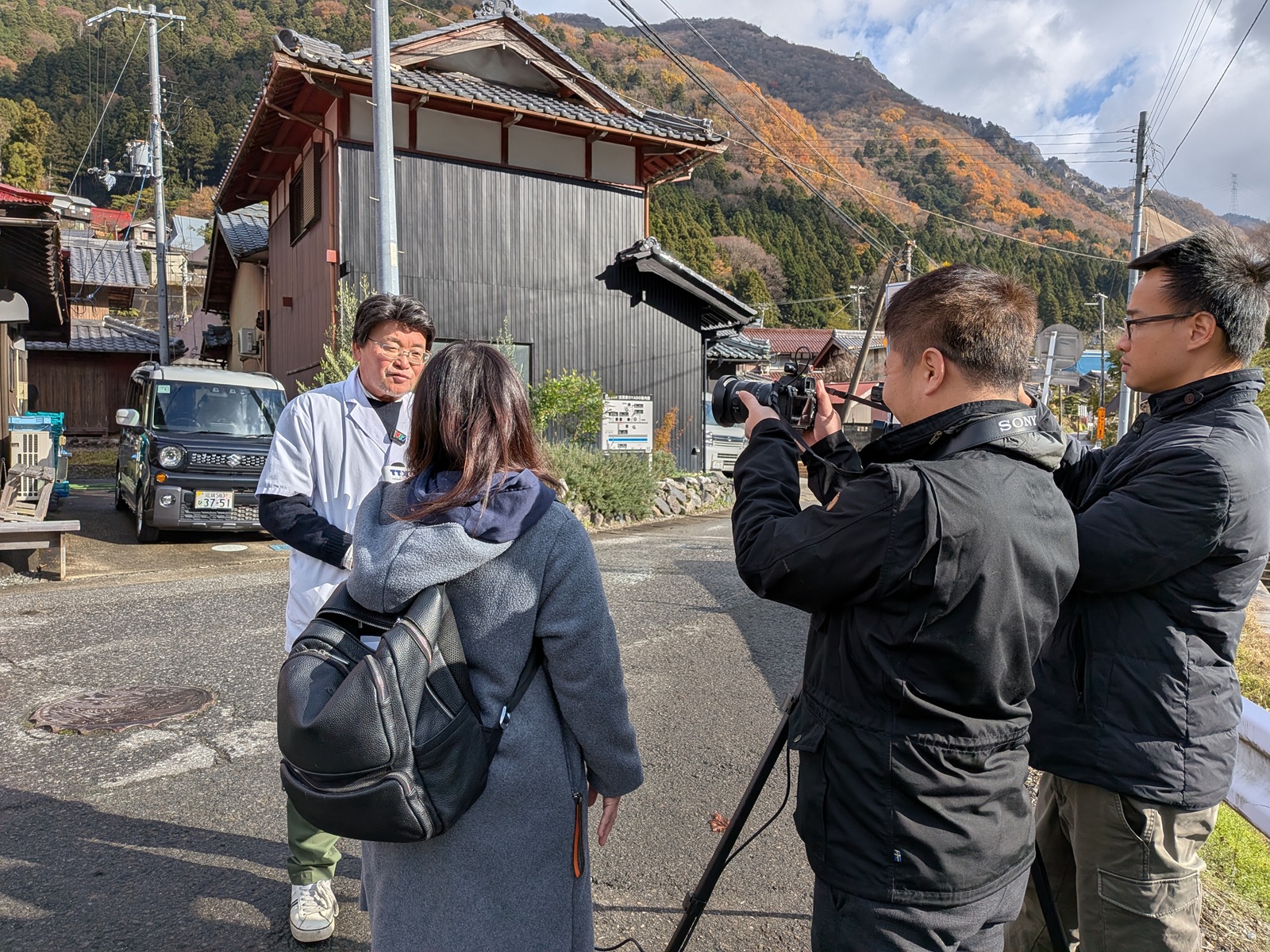
The journalists then went to Ibuki Farm Co., Ltd., located at the foot of Mt. Ibuki in Maebara, Shiga. Ibuki Farm’s president, Mr. Ryuichi Taniguchi, told the tour about why he began growing local crops such as Ibuki soba (buckwheat) and Ibuki daikon (radish), and his current business utilizing regional resources.
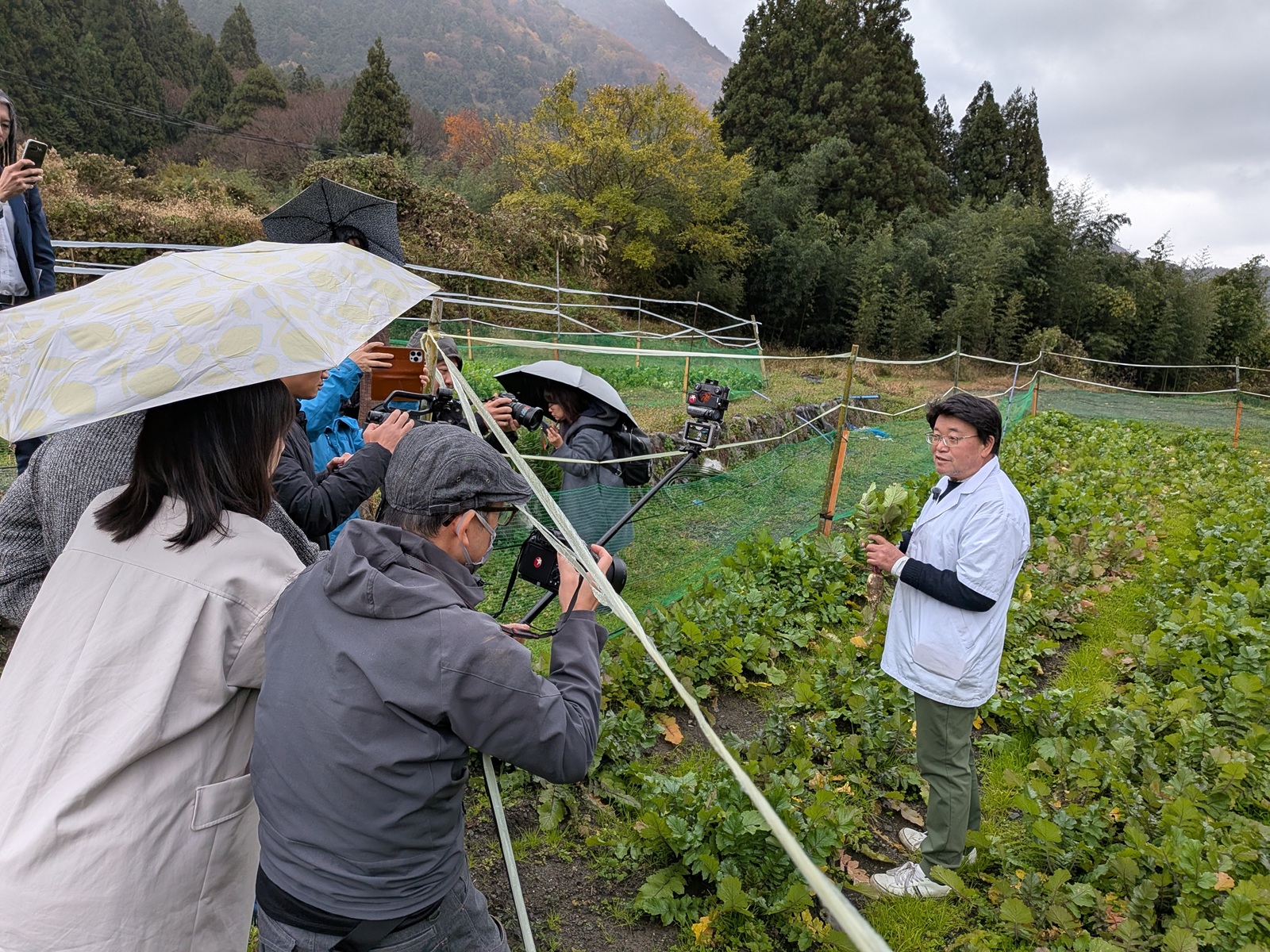
The tour then went to a field where Ibuki daikon was being grown, and watched as it was harvested. While hearing an explanation of the characteristics of crops grown at the foot of Mt. Ibuki, where there is a significant difference in the temperature between day and night, the journalists enthusiastically filmed and photographed the harvest.
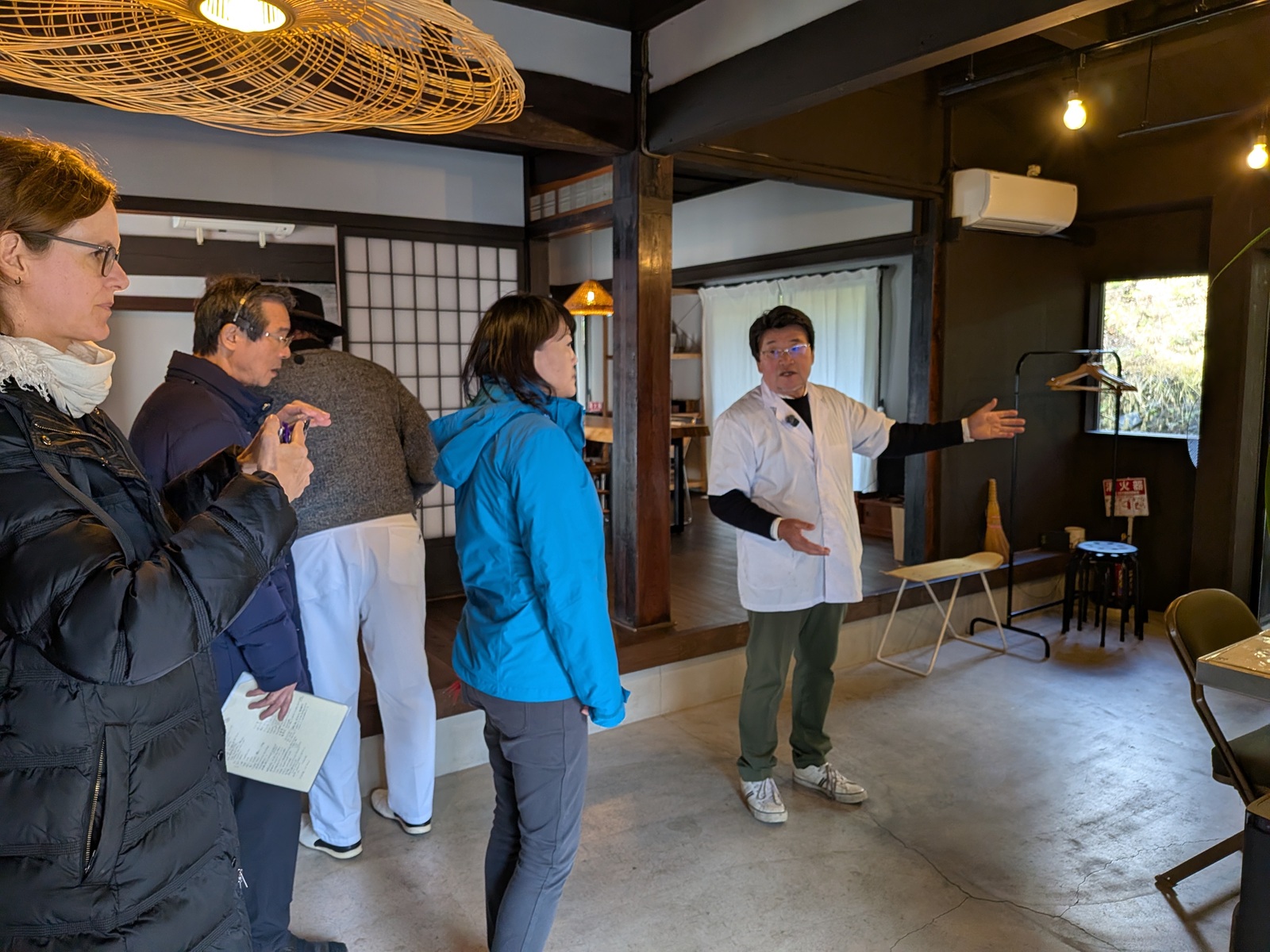
For lunch, the journalists ate soba with grated Ibuki daikon and vegetable tempura at Kyujiro, a soba restaurant run by Ibuki Farm. Afterwards, the tour also saw a hotel facility run by Ibuki Farm out of a renovated traditional house.
The journalists asked questions about whether the fields were affected by wildlife and about the current state of population decline and labor shortages in the area, showing high interest in efforts to stimulate the local economy combining agriculture and tourism.
<Kinomoto-cho Society for the Preservation of Silk Strings for Japanese Musical Instruments (Tsukuda Heishichi Silk Reeling Workshop)>
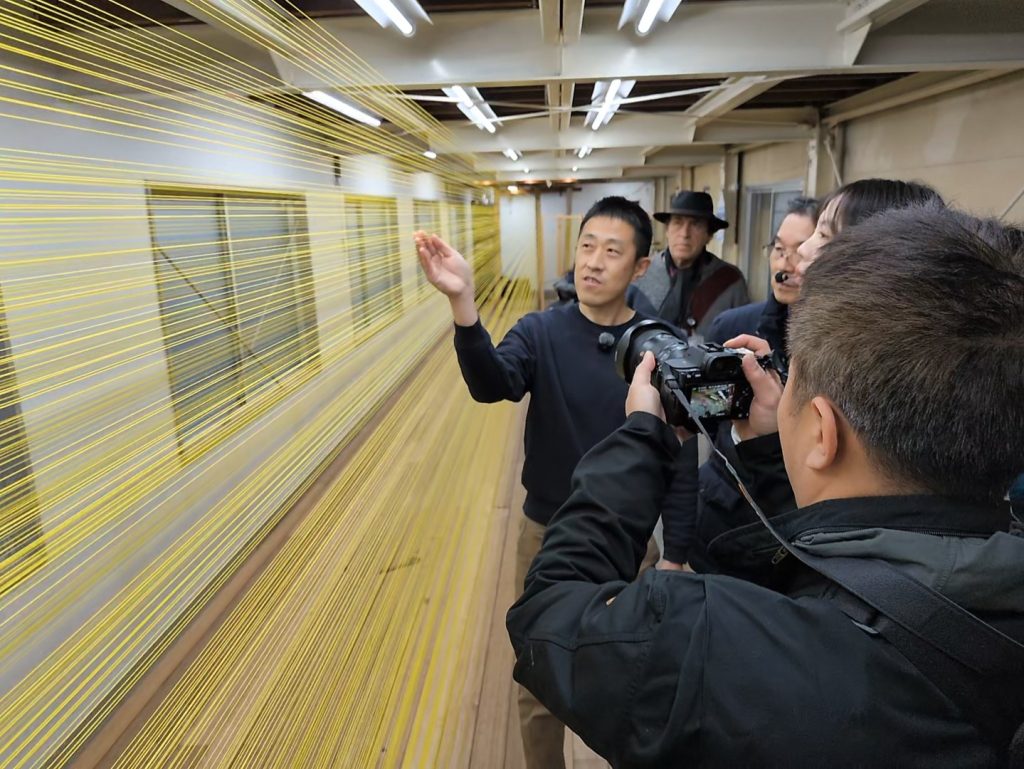
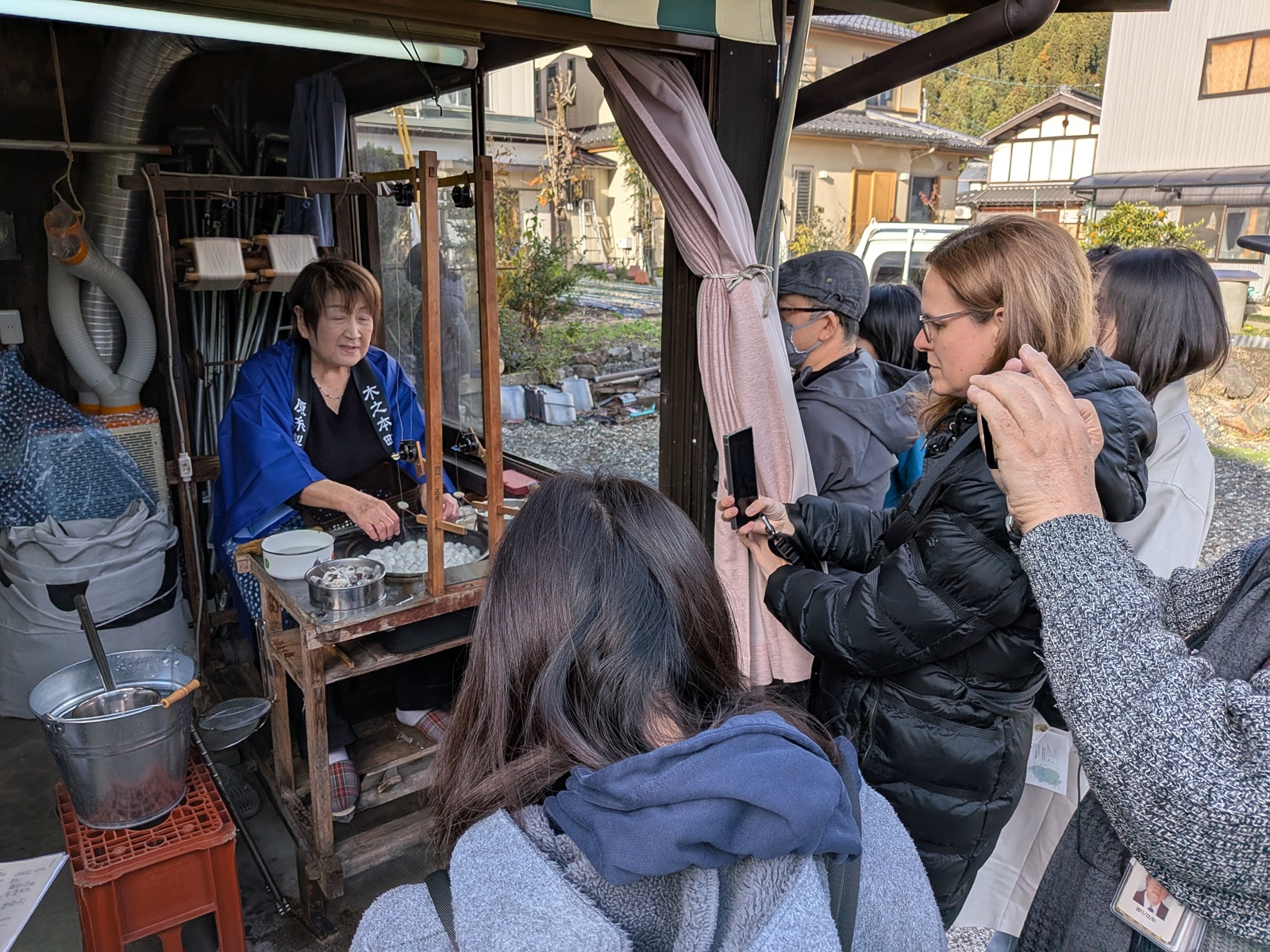
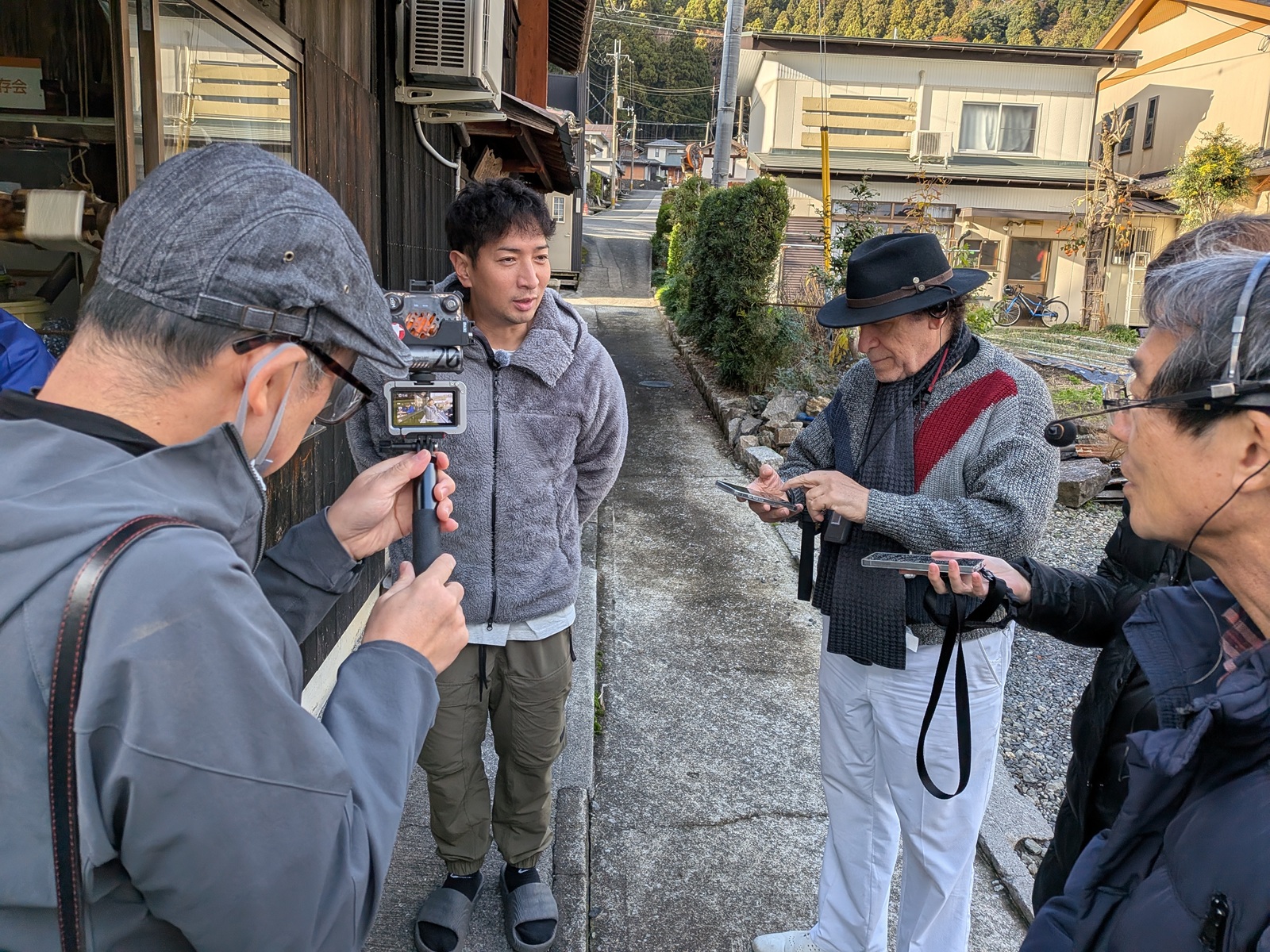
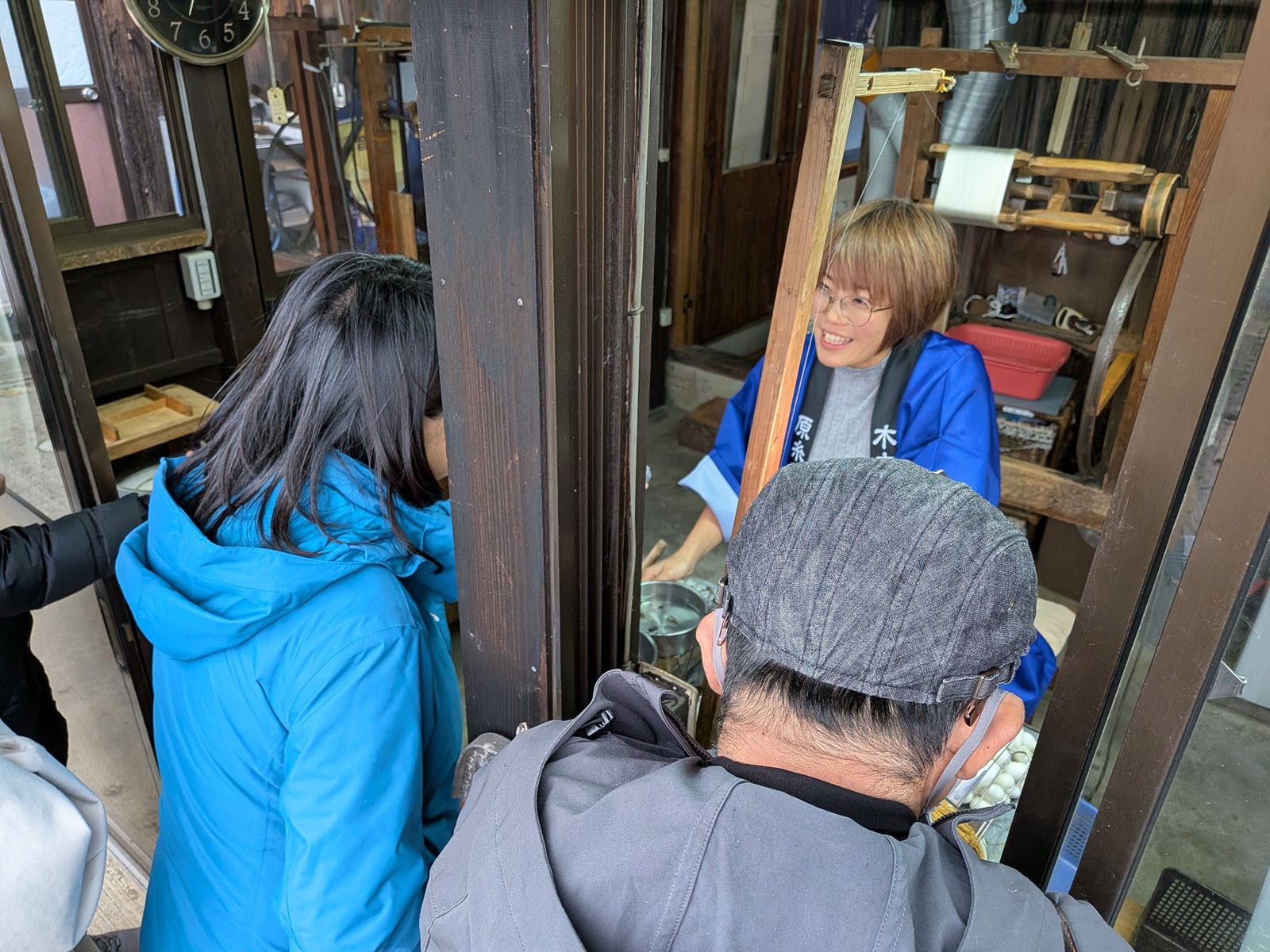
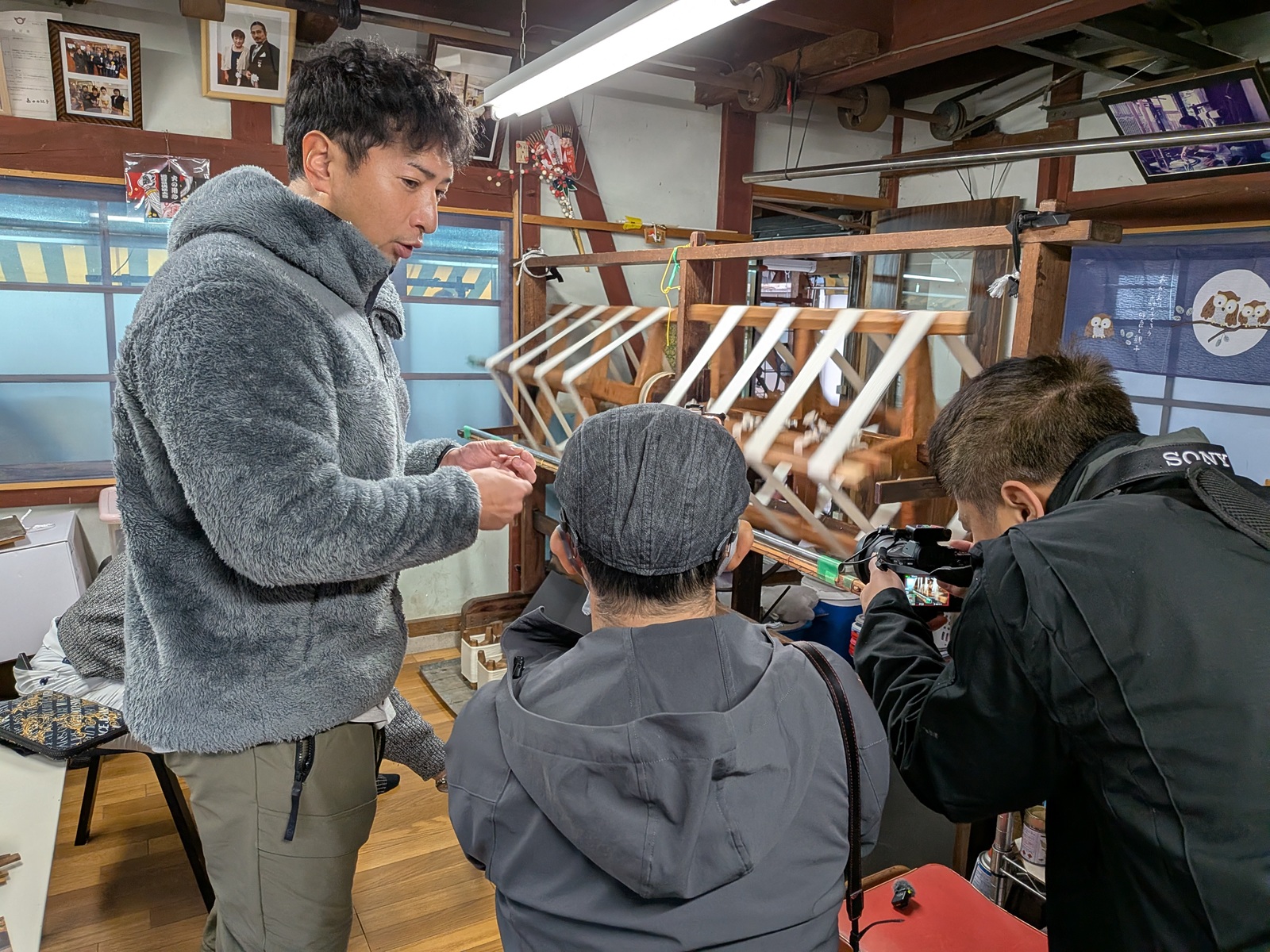
The journalists visited the Kinomoto-cho Society for the Preservation of Silk Strings for Japanese Musical Instruments (commonly known as the Tsukuda Heishichi Silk Reeling Workshop) in Kinomoto, Nagahama. The workshop uses traditional techniques for making silk threads which have been passed down in the region since approximately one thousand years ago.
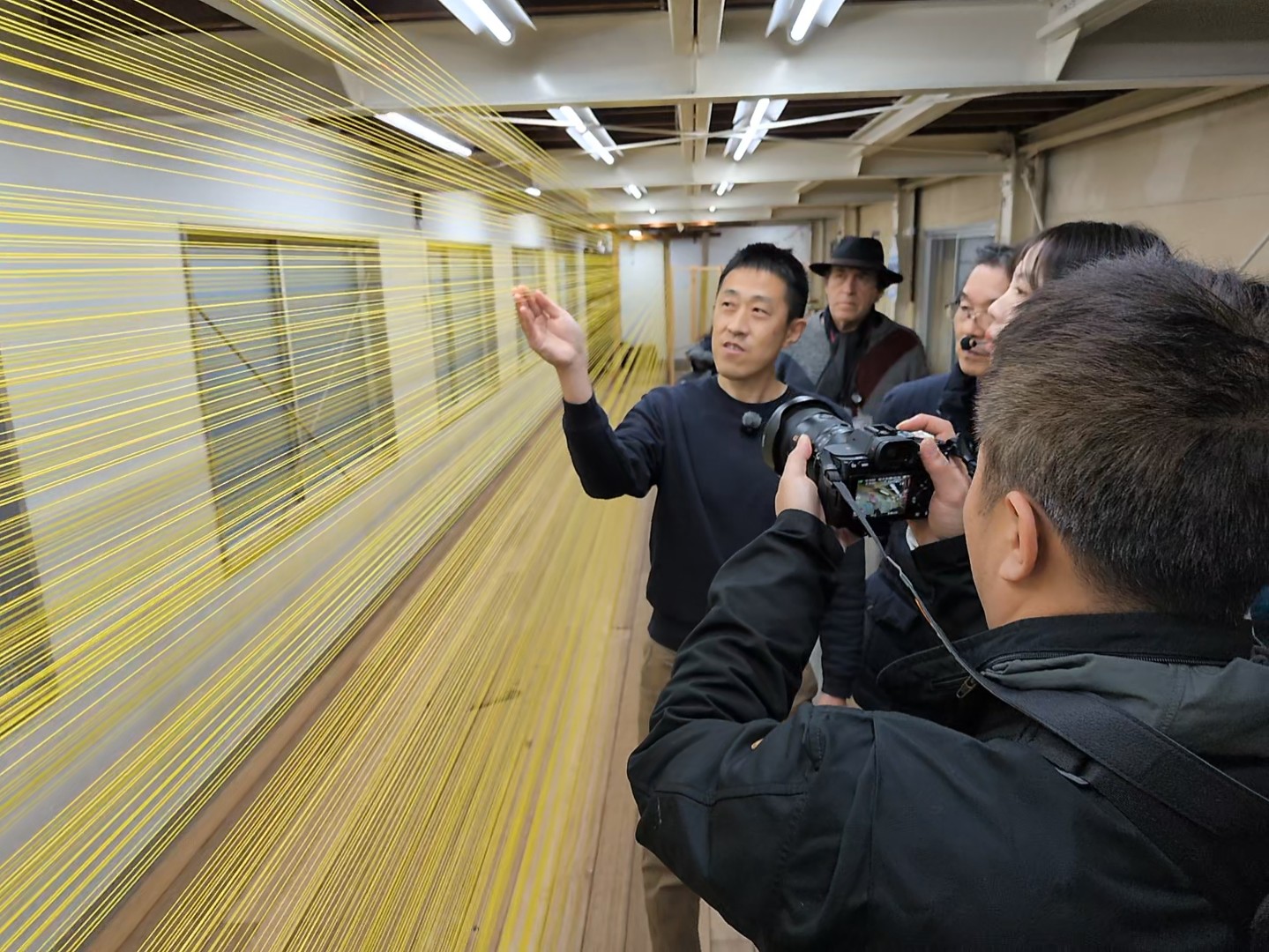
The tour heard from Ms. Mieko Tsukuda, the fourth-generation successor of the workshop, about the history of silkworm farming and silk production in the region, as well as seeing a demonstration of the silk reeling technique passed down in the workshop of soaking cocoons in hot water, extracting superfine threads and weaving them together, which has been designated as a Selected Conservation Technique by the Agency of Cultural Affairs. Next, the tour heard from Mr. Seiji Tsukuda, the fifth-generation head of the workshop, and Ms. Masami Horie, who relocated from the Tokyo area to become an artisan and carry on the traditional techniques, about training the next generation and challenges for continuing the business.
The journalists asked a number of questions about topics such as what was appealing about the work, why so many of the artisans were women, and the working arrangements for a silk reeling artisan.
<Marusan Hashimoto Co., Ltd.>
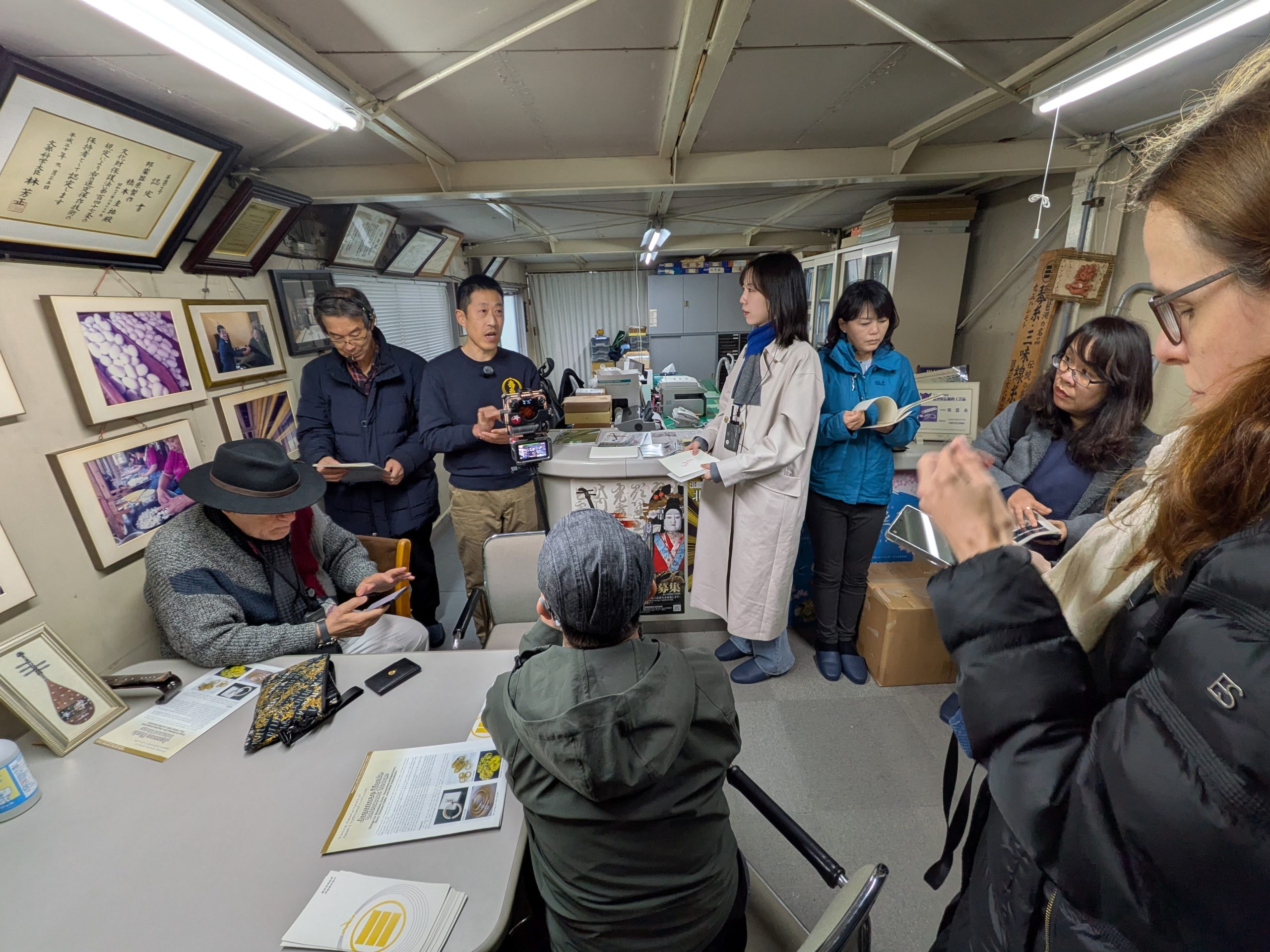
As the final stop on the tour, the journalists visited Marusan Hashimoto Co., Ltd. in Nagahama. Since its founding in 1908, the company has made strings for traditional Japanese instruments such as shamisen and koto, and it is trusted by professional musicians not only in Japan, but around the world.
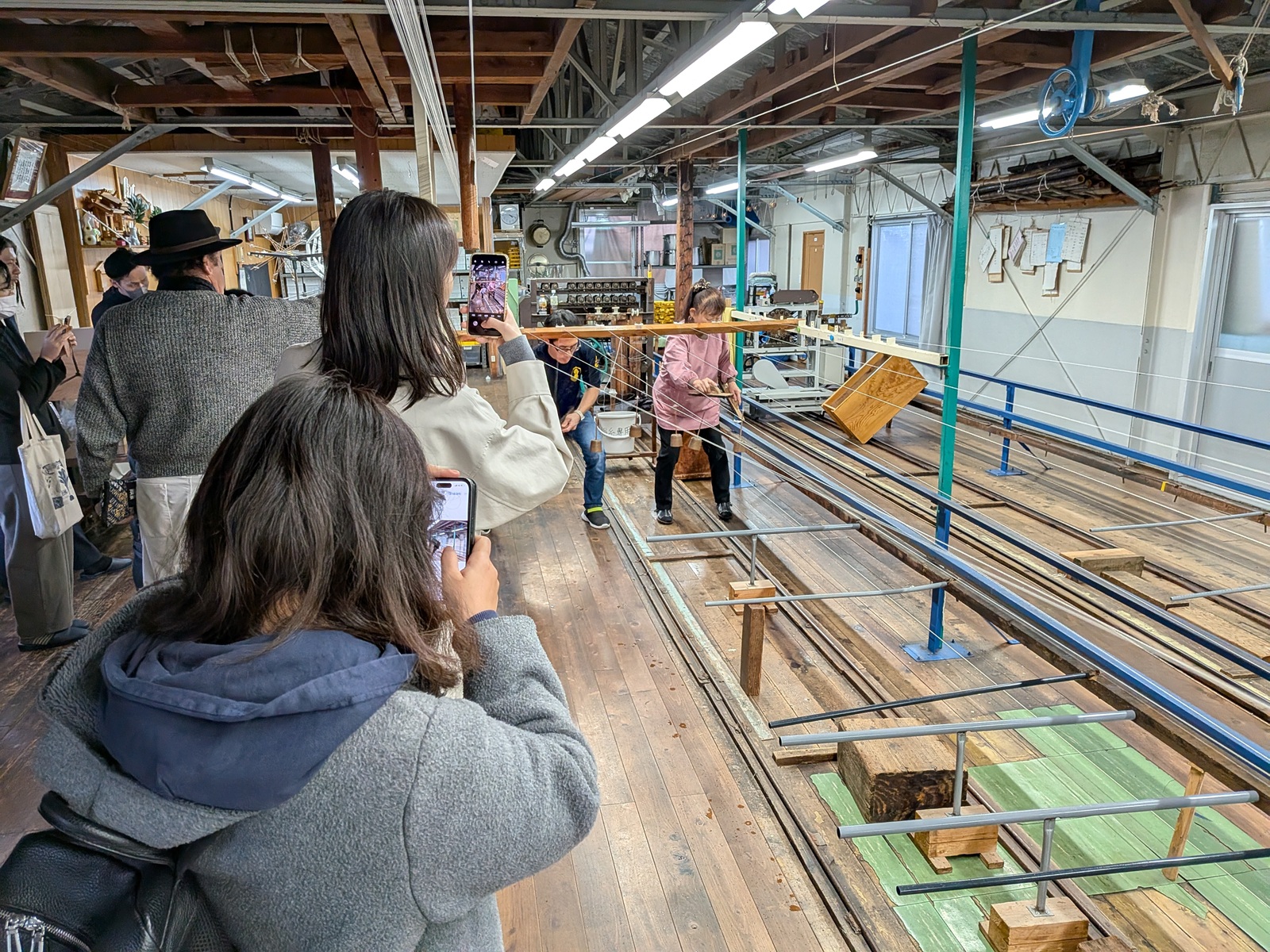
Mr. Hidekazu Hashimoto, president of Marusan Hashimoto Co., Ltd., briefed the journalists on the instrument strings his company made using silk from the Kinomoto-cho Society for the Preservation of Silk Strings for Japanese Musical Instruments (Tsukuda Heishichi Silk Reeling Workshop) and the current state of their overseas business, followed by the tour seeing instrument strings being made in the workshop. The journalists were able to film and photograph up close a demonstration of the traditional komayori technique, which Marusan Hashimoto is the only company in Japan to still use.
Next, the tour listened to a performance by Mr. Gashu Toyozawa, a professional musician, playing a futozao (thick neck) shamisen using silk strings made by the company, and experienced the rich sound made possible by silk strings.
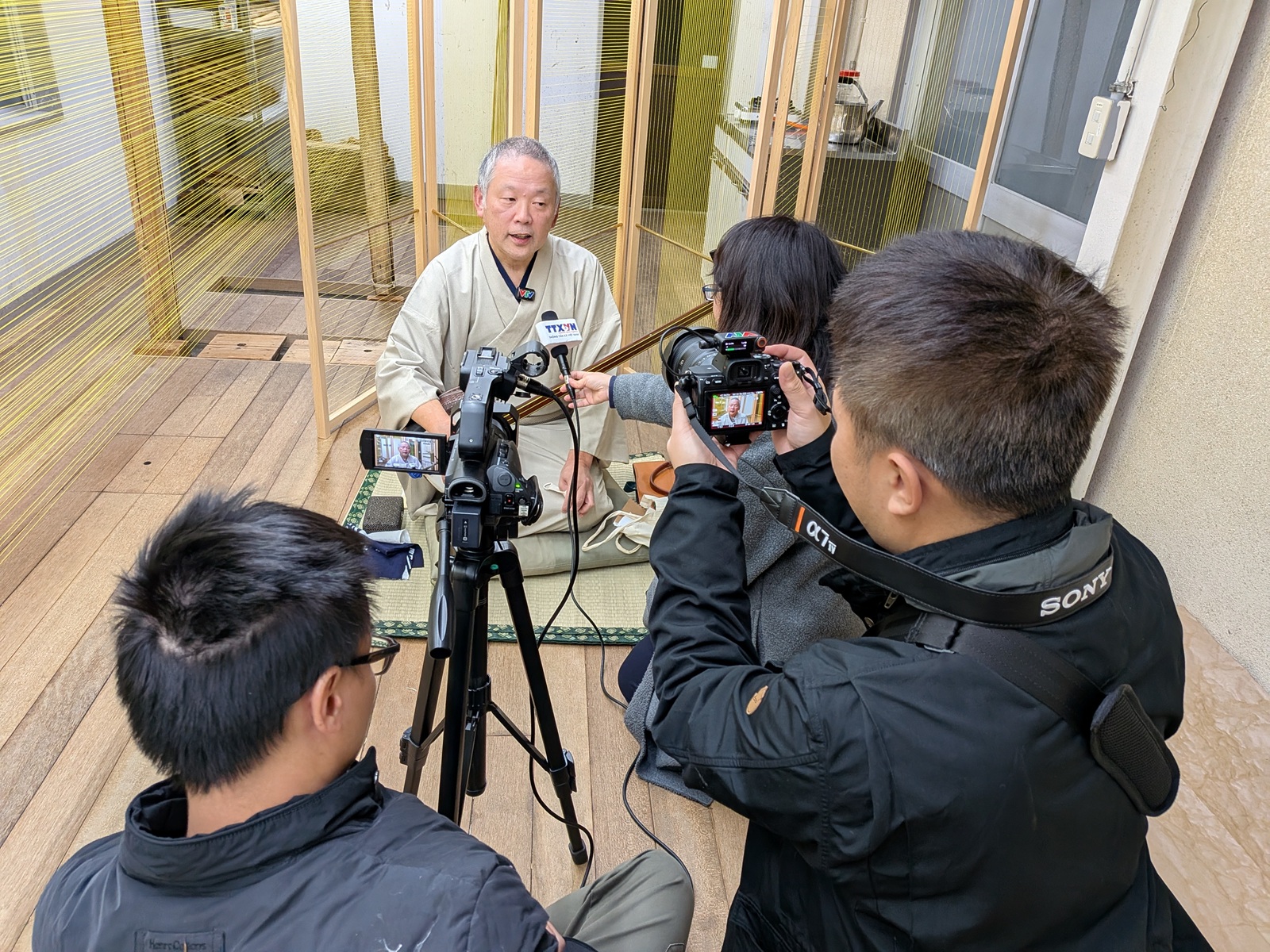
The journalists asked Mr. Hashimoto about the reason behind the unique movements for komayori, carried out by two artisans at once, and the characteristics of silk strings compared to metal or polyester strings. There was also a question to Mr. Toyosawa about what he thought of the Marusan Hashimoto silk strings, and he replied that their strength was that they had a thick, deep sound which carried the sound throughout the venue even without a microphone.
◆Below are some of the reports based on this tour.
Vietnam Television (Vietnam)
“Nghề nuôi trai lấy ngọc tại Nhật Bản”(December 15)
Vietnam News Agency (Vietnam)
“Ibuki Moxa - Di sản dược liệu từ núi tuyết”(December 18)
“Nỗ lực gìn giữ “âm thanh Nhật Bản””(January 11, 2026)
Arab News Japan (Saudi Arabia)
“Japanese restaurateur revives 1,000-year-old local cuisine”(December 31)

